Blog
Breast lift tape: does it work, how to use it and when it is not enough

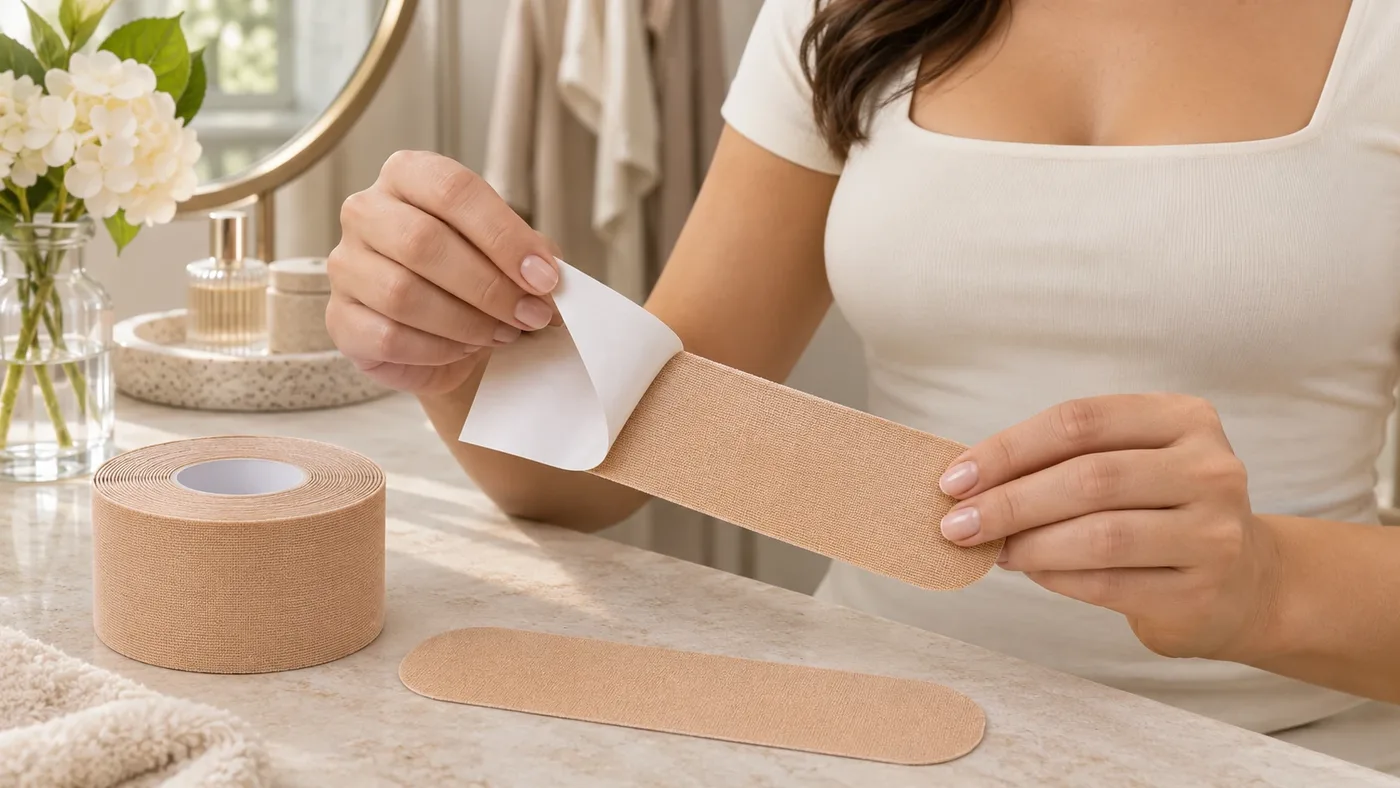
Breast lift tape, often called boob tape, has become a wardrobe staple for backless dresses, deep necklines and strapless tops. It can give a lifted look for an evening without a bra in sight. It can also leave red, sore or blistered skin if it goes on or comes off the wrong way.
This guide explains what breast lift tape can and cannot do, how to apply and remove it safely, what to do if your skin reacts, and when a surgical breast lift is worth considering instead.
Breast lift tape: the short answer
- Breast lift tape is an adhesive tape that holds the breasts in a higher position under clothes, in place of a bra.
- It works for a few hours at a time. It does not change your breasts, and the lift ends when the tape comes off.
- The most common problems are skin irritation, blisters and skin that peels away when the tape is pulled off.
- Patch test it first, never put it on broken or sore skin, cover the nipples, and take it off slowly, ideally after softening it with oil.
- Do not use it on healing scars after breast surgery unless your surgeon agrees.
- If you want a lift that lasts without tape, a surgical breast lift is the operation that raises the breast and removes loose skin.
What is breast lift tape?
Breast lift tape is a stretchy fabric or silicone tape with an adhesive on one side. It is cut into strips and stuck from under the breast up and over towards the shoulder or the side of the chest, so that it holds the breast higher and closer together, much like a bra would.
People use it under clothes where a bra would show, such as backless, strapless and low-cut outfits. Some use it simply because they find it more comfortable than a bra for a short time. Brands sell it in rolls, pre-cut shapes and different skin tones, and many also sell nipple covers and adhesive removers to go with it.
Does breast lift tape work?
Yes, as a temporary support. Tape can hold the breasts higher and give more shape under clothes for a few hours. How well it works depends on the size and weight of your breasts, the tape, how it is applied, heat and sweat, and how much you move.
It is important to be clear about what it does not do:
- It does not lift the breast tissue itself or tighten the skin.
- It does not make breasts smaller, bigger or firmer over time.
- The effect ends as soon as you take the tape off.
The American Society of Plastic Surgeons lists pregnancy, breastfeeding, weight changes, ageing, gravity and heredity among the reasons breasts sag. None of these is changed by tape. A lift that stays in place without support needs surgery.
How to use breast lift tape, step by step
Always follow the instructions that come with your tape, as products differ. As a general guide:
- Patch test first. Stick a small piece on the inside of your arm or on your chest and leave it on for a day. One manufacturer advises a test of about a day and stopping if redness or irritation appears.
- Start with clean, dry skin. Wash off lotions, oils and body creams, and let your skin dry fully. Adhesive does not stick well to oily or damp skin.
- Cover your nipples. Use nipple covers or a small piece of tissue or fabric, so that the adhesive never touches the nipple or areola. The skin there is thin and sensitive.
- Cut the strips before you start. Measure the length you need from under your breast to the top of your chest or your shoulder. Round the corners, as rounded ends are less likely to peel.
- Lift, then tape. Hold your breast in the position you want with one hand. Lay the tape from under the breast upwards and towards the outside, smoothing it as you go.
- Do not over-stretch the tape. Let your hand hold the lift, and lay the tape down to keep it there. Tape pulled very tight over the skin can cause blisters.
- Overlap the strips. Add a second or third strip, overlapping the first, for more support.
- Smooth it down. Press the tape firmly but gently onto the skin with no gaps or wrinkles, and let it settle before you dress.
Breast lift tape for large breasts
Larger, heavier breasts need more support, so the tape carries more weight and more pull falls on the skin. That makes both peeling and skin damage more likely.
- Use wider tape, or more strips that overlap.
- Anchor the tape on a larger area of skin, such as further up the chest or over the shoulder.
- Add a strip across the underside of the breast to support the weight.
- Choose a tape made for heavier support if the packet says so.
- Avoid wearing it for long days in heat, when sweat loosens the adhesive and the skin is more easily irritated.
If you find yourself taping every day because a bra is painful or does not support you, it may be worth talking to a doctor about whether your breast size is causing problems. Our page on breast reduction explains the options.
How long can you wear breast lift tape?
Follow the maximum wear time on the packet. One manufacturer advises taking its tape off after about six hours, because the adhesive grips harder the longer it stays on and can irritate the skin. Do not sleep in it, and give your skin a break between uses.
How to remove breast lift tape without hurting your skin
Most skin damage happens when tape comes off. Pulling it off quickly can strip away the top layer of skin. Wounds UK, which publishes guidance on skin injury from medical adhesives, recommends loosening the edges first and removing tape slowly, close to the skin, in the direction of hair growth, while supporting the skin with your other hand. It calls this low and slow.
- Soften it first. Soak the tape with body oil, baby oil or an adhesive remover, and wait a few minutes. A warm shower can also help.
- Start at an edge. Lift a corner gently and fold the tape back over itself, rather than pulling it straight up.
- Hold the skin. Press the skin next to the tape with your other hand as you peel.
- Go slowly. If it pulls, add more oil and wait.
- Clean and moisturise. Wash off any leftover adhesive, then use a gentle moisturiser.
Breast lift tape side effects and skin problems
Most people can wear tape for a few hours without problems, but it can harm the skin. Guidance on skin injury from adhesives describes several kinds of damage:
| Problem | What it looks like | Usual cause |
|---|---|---|
| --- | --- | --- |
| Skin stripping | Shiny, raw or lighter patches where the top layer of skin came away | Pulling tape off quickly, or taping the same area again and again |
| Tension blisters | Blisters at the ends or edges of the tape | Tape stretched too tightly over the skin |
| Irritant reaction | Red, sore, sometimes swollen skin under the tape | Adhesive left on too long, sweat and heat under the tape |
| Allergic reaction | Red, itchy, sometimes blistered rash in the shape of the tape | An allergy to something in the adhesive |
| Folliculitis | Small red spots around hair follicles | Adhesive irritating the hair follicles |
Scroll sideways for the full table
The NHS describes contact dermatitis, the kind of eczema caused by a substance touching the skin, as a reaction that usually appears within a few hours or days. It advises avoiding the substance that caused it and speaking to a pharmacist about troubling symptoms.
Who should not use breast lift tape?
Do not use breast lift tape:
- on broken, sunburned, irritated or very sensitive skin
- if you have reacted to plasters, medical tape or adhesives before, unless a patch test shows no reaction
- on healing wounds or scars after breast surgery, unless your surgeon says it is safe
- over a lump, a rash or any change in your breast that has not been checked by a doctor
If you are pregnant or breastfeeding, your skin may be more sensitive, and the nipples should never be taped.
Breast lift tape after breast surgery
After a breast lift, breast reduction or breast augmentation, your surgeon will tell you what support to wear while you heal, which is usually a surgical or sports bra. Lift tape on a healing incision can pull on the wound and damage fragile new skin, so wait until your surgeon says the scars have healed.
Some surgeons suggest silicone scar tape or silicone gel sheets once the wound has closed. These are a different product, made to protect and flatten scars, not to lift the breast. A Cochrane review found that the evidence for silicone gel sheets on raised scars is of low certainty, so ask your surgeon whether they would help you. Our guide on what to expect after a breast lift covers recovery in more detail.
Breast lift tape vs a surgical breast lift
| Feature | Breast lift tape | Surgical breast lift |
|---|---|---|
| --- | --- | --- |
| What it does | Holds the breasts higher under clothes | Raises the breast, removes loose skin and tightens the tissue |
| How long it lasts | Until you take it off | Long-lasting, though ageing, weight change and pregnancy affect it |
| Changes the breast itself | No | Yes |
| Scars | None | Permanent scars on the breast |
| Recovery | None | Several weeks |
| Main risks | Skin irritation, blisters, skin stripping | The risks of surgery and anaesthesia |
Scroll sideways for the full table
The American Society of Plastic Surgeons describes a breast lift as an operation that raises the breasts by removing excess skin and tightening the surrounding tissue. It does not significantly change breast size. If your breasts have also lost volume, a lift can be combined with implants, which our guide to breast lift vs breast implants explains. You may also have seen PRP injections sold as a vampire breast lift, which is not a lift either.
When tape is not enough
Tape is a good tool for an outfit or an event. If you find you rely on it every time you get dressed, or what bothers you is the shape and position of your breasts rather than what you are wearing, it may be time to talk to a plastic surgeon. Our breast lift page explains the operation, and you can read about a breast lift in Turkey if you are considering surgery abroad.
Does breast lift tape really work?
Is boob tape bad for your skin?
Does breast lift tape work on large breasts?
How do you get boob tape off without it hurting?
Can you put tape on your nipples?
Can you sleep in boob tape?
Can breast lift tape permanently lift your breasts?
Can I use boob tape after a breast lift?
Medical disclaimer
This article is informational, not medical advice. Always consult a licensed physician about your individual case before booking any procedure.