Blog
Gastric sleeve Turkey reviews: what patients report and how to read them

Published 30 October 2026
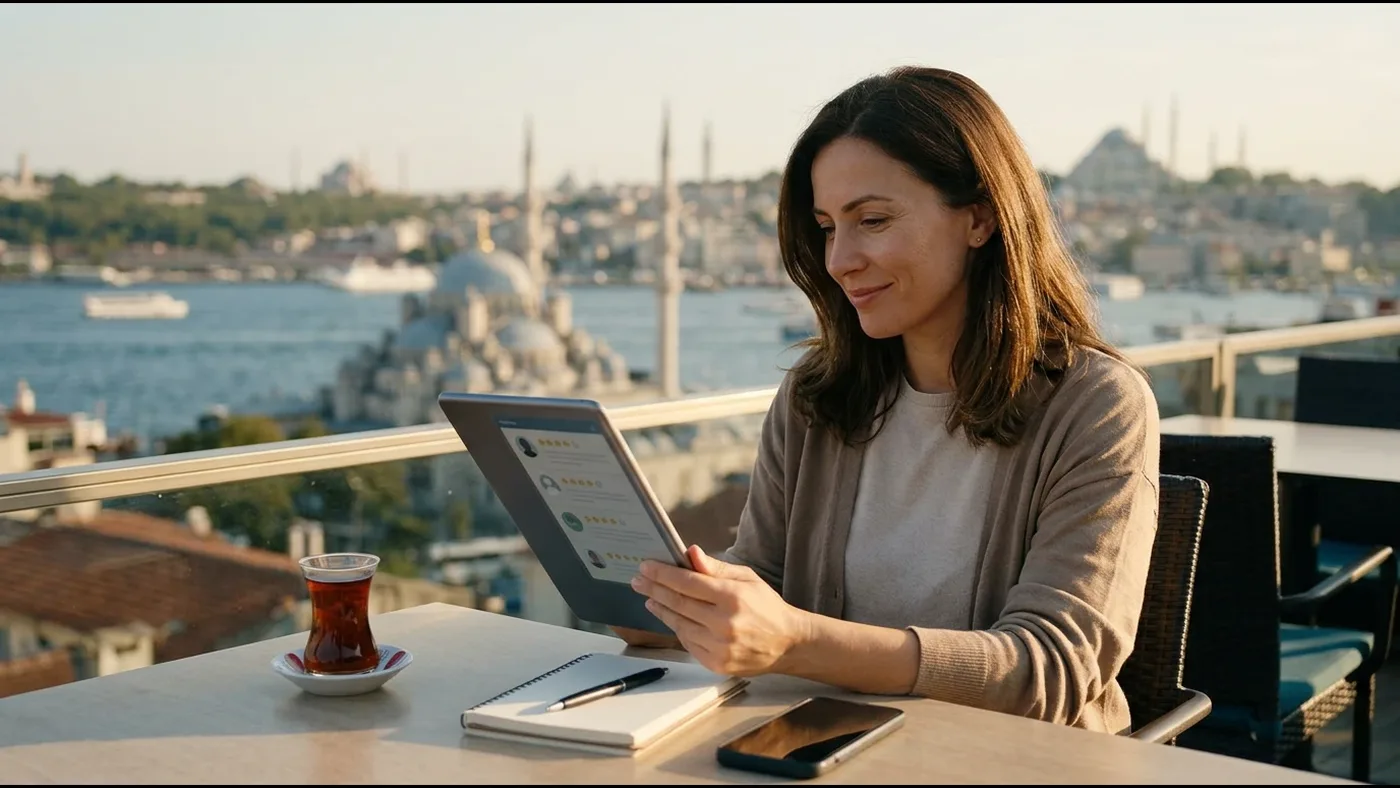
If you are thinking about a gastric sleeve in Turkey, you will probably spend hours reading reviews before you book. That is sensible. Reviews are one of the few ways to hear from people who have already made the trip. But gastric sleeve Turkey reviews are also easy to misread: most are written in the first days or weeks after surgery, many sit on pages run by the clinics or agents selling the operation, and some are not genuine at all.
This guide explains what patients tend to praise and complain about, why a glowing review written at the hotel tells you little about the years that follow, how to spot fake or paid reviews, and which questions you still need to ask a clinic yourself.
Gastric sleeve Turkey reviews: the short answer
- Most positive reviews praise the price, the speed of booking, all-inclusive packages, airport transfers and friendly coordinators.
- Most serious complaints are about what happens after you fly home: thin follow-up, no operation notes, little dietitian support and complications treated by the NHS.
- A review written in the first weeks cannot tell you about weight regain, reflux or vitamin problems, which show up much later.
- Read reviews on independent platforms, look for detail about the surgeon and the aftercare, and be wary of reviews that read like adverts.
- Reviews are a starting point. The decision should rest on the surgeon, the assessment before surgery and a written aftercare plan.
Why people read reviews before a gastric sleeve in Turkey
For many people in the UK, Ireland and Europe, a gastric sleeve in Turkey costs much less than a private operation at home, and there is no long waiting list. Packages often include the hospital stay, a hotel, transfers and an interpreter, which makes the trip feel simple to plan.
What you cannot easily judge from home is the quality of the surgeon, the hospital and the care that follows. Reviews fill that gap. The problem is that the information available online is not balanced. A study of international bariatric surgery websites published in Obesity Surgery found that patient testimonials appeared on nearly every site, that only one site carried a negative account, and that the overall picture focused on the positive side of previous patients' experiences.
So the useful question is not whether a clinic has good reviews. Almost all of them do. It is whether the reviews you are reading are independent, recent, detailed and written long enough after surgery to mean something.
What positive reviews usually praise
Read enough gastric sleeve reviews from Turkey and the same themes come up again and again:
- Price and value. Many patients say the total cost was a fraction of a private operation at home, with the hotel and transfers included.
- Speed. People often describe being booked within weeks rather than waiting for an NHS referral.
- Organisation. Airport pick-ups, hospital transfers, interpreters and a coordinator on WhatsApp come up in most positive reviews.
- The hospital itself. Modern rooms, attentive nurses and a short hospital stay are common points of praise.
- Early weight loss. Reviews written a few months later often focus on the weight that has already come off.
None of this is unimportant. A well-organised trip matters when you are recovering from surgery in another country. But notice what these reviews rarely mention: the name of the surgeon, how the assessment before surgery was done, and what support the patient had once they were home.
What negative reviews and complaints describe
The more serious complaints tend to be about aftercare rather than the operation day. UK surgical bodies have raised the same concerns. The British Association of Aesthetic Plastic Surgeons and the British Obesity and Metabolic Surgery Society have warned in a joint statement that routine follow-up after surgery abroad can be poor or missing, which for bariatric patients raises the risk of weight regain and nutritional deficiencies, and that there is an assumption the NHS will deal with any problems on return.
Common themes in critical reviews and patient accounts include:
- Follow-up that stops at the airport. A WhatsApp number is not the same as a dietitian, a surgeon who reviews you and blood tests.
- No paperwork. The Obesity Surgery study found that few clinics gave patients their medical notes or a discharge summary, and very few involved the patient's own doctor at home.
- Rushed assessment. Some patients describe meeting the surgeon briefly on the day, with little discussion of whether a sleeve was the right operation.
- Unexpected extra costs. Extra nights, scans or treatment for a complication that were not in the package price.
- Complications treated at home. A rapid review in BMJ Open of complications after surgery abroad found that UK hospitals regularly treat bariatric patients who return with problems such as leaks, infections and bleeding, and that the true number is probably underestimated because it is not recorded consistently.
A single bad review does not make a clinic unsafe, and a complication can happen after any operation, anywhere. What matters is how the clinic responded: whether the patient could reach the surgeon, whether the problem was taken seriously and who paid for the treatment.
Why early reviews miss the long-term picture
A gastric sleeve is not finished when you leave hospital. The NHS advises that people who have weight loss surgery attend regular follow-up appointments for the rest of their life, take vitamin and mineral supplements and have blood tests to check their levels.
The problems that matter most often appear months or years later:
- weight regain, often linked to eating habits and support rather than the operation itself;
- reflux and heartburn, which can start or get worse after a sleeve;
- low iron or low levels of B vitamins and vitamin D, which cause tiredness and other symptoms if they are not picked up;
- difficulty adjusting to new eating patterns without help from a dietitian.
A review written from the hotel cannot tell you any of this. When you read reviews, look for patients who wrote again long after surgery, or who describe their weight, their blood tests and the support they had at home. Our guide to the stages of the gastric sleeve diet shows how much of the work happens after the trip.
How to spot fake or paid reviews
In the UK, fake reviews are now banned outright. Under the Digital Markets, Competition and Consumers Act, businesses must not write, commission or publish fake reviews, or reviews that hide the fact that the writer was paid or rewarded, and sites that publish reviews must take reasonable steps to prevent them. That has not made fake reviews disappear, especially on sites based outside the UK.
Signs that a review may not be genuine:
- It reads like an advert, with the clinic's full name and package details repeated several times.
- It praises everything and describes nothing specific: no surgeon, no dates, no detail about recovery.
- A clinic has a burst of five-star reviews posted within a few days of each other.
- The reviewer has only ever posted one review, or has reviewed several competing clinics in the same way.
- Reviews mention a discount, a free night or a gift in return for writing them.
- Negative reviews are answered with aggression or with personal details about the patient.
Genuine reviews tend to be uneven. They mention something that went less well, name the people involved and describe the weeks after surgery as well as the trip.
Where to read gastric sleeve reviews
Each source has strengths and blind spots:
- Trustpilot and Google reviews are independent of the clinic, but check who is being reviewed. Many profiles belong to agencies and facilitators rather than the hospital or surgeon.
- Patient forums, Reddit and Facebook groups often carry the most honest long-term accounts, good and bad. Some groups are run by agents, so check who moderates them.
- Clinic and agency websites show reviews the business has chosen to display. Treat them as marketing.
- Video testimonials are useful for seeing the hospital, but they are usually filmed during the trip, before the long-term results are known.
On Flymedi, every clinic carries a FlymediScore, our own rating out of ten. It is a separate measure from any Trustpilot rating and from the number of reviews a clinic has collected, and the three are never combined. You can compare clinics, their scores and their written reviews on our gastric sleeve in Turkey page.
Questions reviews cannot answer for you
Before you book, ask the clinic directly and get the answers in writing:
- Who will operate? Ask for the surgeon's name, their specialty and how many sleeve operations they perform, and check that the hospital is licensed by the Turkish Ministry of Health and authorised to treat international patients.
- How will they decide a sleeve is right for you? A proper assessment covers your medical history, your medicines and often tests such as blood tests or an endoscopy. Our comparison of gastric sleeve vs gastric bypass explains why the choice matters, especially if you have reflux.
- What does the price include? Ask which scans, extra nights, medicines and supplements are included, and what happens to the cost if there is a complication.
- What preparation is needed? Most teams ask for a liver shrinking diet before surgery. See our guide to the gastric sleeve pre-op diet.
- What paperwork will you take home? Ask for the operation notes, a discharge summary and the details of any medicines.
- What is the follow-up plan? Ask who you contact if something goes wrong, whether a dietitian is included, how long follow-up lasts and how blood tests will be arranged at home.
Planning your follow-up at home
If you live in the UK, talk to your GP before you travel. Some NHS services say they will not provide routine follow-up for surgery that was arranged privately, although they will always treat an emergency. Knowing in advance who will check your blood tests and prescribe your supplements avoids a gap after the clinic's own follow-up ends.
Keep your operation notes and discharge summary somewhere you can find them quickly. If you develop severe abdominal pain, a fast heart rate, a fever or vomiting that does not stop in the weeks after surgery, seek urgent medical help and show the notes to the team treating you.
Are gastric sleeve reviews from Turkey reliable?
What are the risks of a gastric sleeve in Turkey?
What do bad reviews of gastric sleeve surgery in Turkey usually say?
How can you tell if a clinic's reviews are fake?
Where can I read honest gastric sleeve Turkey reviews?
What should I ask a clinic before booking a gastric sleeve in Turkey?
Will the NHS look after me after a gastric sleeve abroad?
Medical disclaimer
This article is informational, not medical advice. Always consult a licensed physician about your individual case before booking any procedure.