Blog
Achondroplasia limb lengthening: what it involves, results, risks and the debate

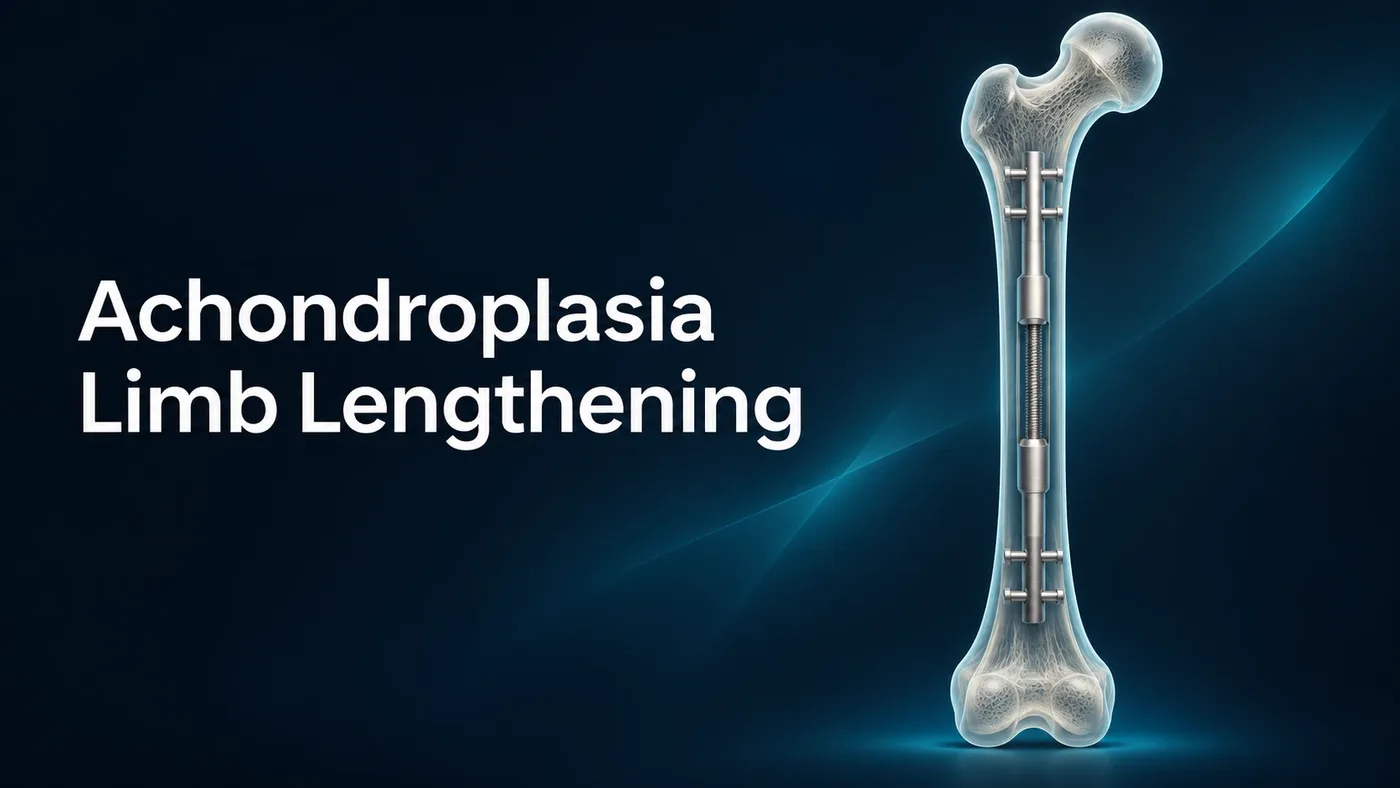
Limb lengthening for achondroplasia is a long and demanding treatment. It can add a significant amount of height and longer arms, but it takes years, involves several operations and carries a real risk of complications. It is also a personal decision that people with achondroplasia, their families and doctors see very differently.
This guide explains how limb lengthening works in achondroplasia, what results the published studies report, when it is usually done, the risks, why it is debated, and how it fits alongside newer growth medicine. For a broader look at limb lengthening in other forms of short stature, see our guide on how dwarfism limb lengthening works and who it is really for.
Achondroplasia limb lengthening: the short answer
- Achondroplasia is a genetic condition in which the arms and legs are short compared with the trunk.
- Limb lengthening, often called extended limb lengthening in achondroplasia, gradually lengthens the thigh and shin bones and often the upper arm bones, using a frame or an internal nail.
- The height gained varies widely. A systematic review found mean gains in standing height from about six to about twenty centimetres across the studies it included, and some specialist centres report more.
- It is usually done in stages over several years, often starting in childhood or adolescence.
- Complications are common, most often fractures and pin site infections, and the treatment burden is high.
- Little People of America's medical advisory board says there are no established medical indications for extended limb lengthening, and that the person should be old enough to take part fully in the decision.
- Vosoritide, a medicine approved for children with achondroplasia whose growth plates are still open, increases growth speed. Its effect on final adult height is not yet known.
What is achondroplasia?
Achondroplasia is a genetic condition that affects how bone grows. MedlinePlus, the genetics service of the US National Library of Medicine, says it occurs in between one in fifteen thousand and one in forty thousand newborns and is caused by a change in a gene that controls bone growth. About eight in ten people with achondroplasia are born to parents of average height, because the change is new in the child.
People with achondroplasia usually have short arms and legs, especially the upper arms and thighs, with a trunk of average length. MedlinePlus gives an average adult height of about four foot four for men and four foot one for women, and notes that intelligence is usually normal. Common health issues include bowed legs, ear infections, back pain and, in some adults, narrowing of the spinal canal (spinal stenosis).
Why limb lengthening in achondroplasia is different
Most limb lengthening operations lengthen one leg to correct a difference in length, or both legs to add a few centimetres of height. In achondroplasia, the aim is usually larger and covers more of the body:
- Both legs, more than once. The thigh bones (femurs) and shin bones (tibias) are lengthened, often in separate stages.
- The arms as well. The upper arm bones (humeri) are often lengthened to improve reach.
- Body proportions, not just height. Because the trunk is of average length, lengthening the limbs changes how arms and legs relate to the body.
- Correcting bowed legs. Leg alignment can be corrected during the same treatment.
The total treatment is long, and every extra bone lengthened adds time, surgery and risk.
How achondroplasia limb lengthening works
Limb lengthening uses the body's ability to make new bone in a gap that is widened slowly.
- The operation. Under anaesthetic, the surgeon cuts the bone (an osteotomy) and attaches a device: an external frame fixed with pins or wires, or a nail inside the bone that can be lengthened.
- Lengthening. After a short rest, the device is lengthened a little each day. New bone forms in the gap as it widens, and the muscles, nerves and skin stretch with it.
- Consolidation. Once the target length is reached, the new bone needs months to harden before the device is removed.
- Physiotherapy. Daily exercises keep the joints moving and stop the muscles from tightening. This is one of the hardest parts of treatment, and it continues for months.
Your surgeon will explain which device suits each stage, and why.
Leg lengthening in achondroplasia
The legs are usually lengthened in two or more stages. Some surgeons lengthen both shin bones first and both thigh bones later. Others lengthen the thigh and shin of the same leg, or all four segments in a planned sequence.
A retrospective study of thirty-three children and teenagers with achondroplasia, published in Frontiers in Pediatrics, reported an average gain of about eight centimetres in the shin bones and about seven centimetres in the thigh bones. The authors concluded that lengthening both legs in four surgical steps may be a viable technique.
Arm lengthening in achondroplasia
Short upper arms can make everyday tasks harder, such as reaching objects on a shelf, personal hygiene or dressing. Lengthening the upper arm bones aims to improve reach and independence rather than height.
In a long-term series reported by the Paley Institute in the journal Children, the upper arm bones were lengthened by between ten and twelve centimetres in all the patients with achondroplasia. Arm lengthening has its own risks, including nerve problems and stiffness of the elbow, so it needs the same careful planning as the legs.
How much height can limb lengthening add?
It depends on the number of stages, the age at which treatment starts and the surgical approach.
- A systematic review in Advances in Therapy found that the reported increase in standing height varied widely across nine studies, from a mean of about six centimetres to about twenty centimetres.
- The Paley Institute series of seventy-five patients followed into adulthood reported an average total lengthening of twenty-seven centimetres for achondroplasia, with greater gains in those who started as children than in those who started as adults.
These figures come from different centres, methods and numbers of stages, and the larger gains come from specialist centres reporting their own results. Ask any surgeon for the results and complication rates of their own patients with achondroplasia.
At what age is limb lengthening done?
There is no single age. Treatment may start in childhood, in the teenage years or in adulthood, and each has trade-offs.
- In childhood. Starting younger may allow larger total gains. In the Frontiers in Pediatrics study, the average age at the first operation was under nine years. The Paley Institute author advises against lengthening before about seven in girls and eight in boys.
- In adolescence. A teenager can take a fuller part in the decision and in demanding physiotherapy.
- In adulthood. The person decides for themselves. In the Paley Institute series, the average total gain was smaller in those who started as adults.
The age question is also an ethical one. Little People of America's medical advisory board says prospective patients should be old enough to participate fully in the discussions and in the decision.
Risks and complications
Limb lengthening in achondroplasia is a long treatment with a high rate of complications. Most can be treated, but some can affect the final result or need further surgery.
- Fractures of the new bone, especially after the device is removed
- Pin site and deeper infections
- Bone that heals too early, too late or not at all
- Joint stiffness and contractures in the hip, knee, ankle or elbow
- Nerve injury, usually temporary
- Unequal limb lengths or angled bones
- A higher risk of arthritis later in life, which Little People of America's medical advisory board lists among the risks
The systematic review in Advances in Therapy reported that fractures and pin site or pin tract infections were the complications reported most often. In the Frontiers in Pediatrics study, complications occurred in about one in five lengthened bone segments, the most common being new bone that hardened too early.
Why is limb lengthening for achondroplasia debated?
Limb lengthening for achondroplasia is accepted in some countries and much more debated in others. The systematic review in Advances in Therapy notes that its use varies by geography and can involve a high treatment burden and severe complications.
The debate is about more than surgery:
- Medical need. Little People of America's medical advisory board says there are no established medical indications for symmetric extended limb lengthening, and that it is done mainly for adaptive, cosmetic and psychosocial reasons. It states that it neither advocates for nor condemns the procedure.
- Identity. Many people with achondroplasia see their stature as part of who they are, not something that needs fixing, and live full lives without surgery.
- Consent. When treatment starts in childhood, the decision is taken before the child can fully weigh years of treatment against the result.
- Evidence. There are no randomised trials, and most results come from the centres that perform the surgery.
Others choose lengthening to improve reach, independence and access to everyday spaces designed for average-height people, and are glad they did. Both views exist among people with achondroplasia themselves. A good surgeon will respect whichever choice you make, including the choice not to have surgery.
Limb lengthening vs vosoritide
Vosoritide (brand name Voxzogo) is a medicine that works on the pathway affected by achondroplasia and stimulates bone growth. The US Food and Drug Administration approved it in November two thousand and twenty-one for children aged five and over with achondroplasia whose growth plates are still open, and later extended it to younger children. It is given as an injection under the skin.
In the trial behind the approval, children treated for a year grew on average about one and a half centimetres more than children given a placebo. The approval was conditional on a further study of final adult height, which is not yet known. The most common side effects were injection site reactions, vomiting and a fall in blood pressure.
| Feature | Limb lengthening | Vosoritide |
|---|---|---|
| What it does | Lengthens chosen bones by surgery | Increases the speed of growth |
| Who it is for | Children, teenagers or adults, after careful selection | Children whose growth plates are still open |
| Effect on height | Can add a significant amount, depending on the stages done | A modest increase in yearly growth; effect on final height not yet known |
| Arms | Can be lengthened separately | Affects growth generally |
| Main burden | Several operations, frames or nails, months of physiotherapy | Regular injections over years |
| Main risks | Fractures, infection, joint stiffness, nerve injury | Injection site reactions, vomiting, low blood pressure |
Scroll sideways for the full table
The two are not alternatives for everyone. A young child may be offered medicine by their growth specialist, and the question of surgery may come later, or never. Decisions about medicine belong with a paediatric endocrinologist or skeletal dysplasia team.
How to choose a centre
Little People of America's medical advisory board advises looking for a centre with a broad team and special expertise in skeletal dysplasia, able to follow patients for ten years or more. Before you decide, ask:
- How many people with achondroplasia has the surgeon treated, and what are their own results and complication rates?
- Which bones will be lengthened, in how many stages, and over how many years?
- Will a frame or an internal nail be used at each stage, and why?
- What physiotherapy is needed, where will it happen, and who will provide it after you go home?
- How will spinal stenosis, hip problems and bowed legs be checked before and during treatment?
- Who will handle complications, including after you return home?
- Has the diagnosis been confirmed, and have you had genetic counselling?
Limb lengthening in Turkey
If you are considering treatment abroad, the same questions apply. Achondroplasia lengthening is a long treatment, so plan for several visits, long stays and a physiotherapist near home who can work with the surgeon. You can read more about limb lengthening surgery and limb lengthening surgery in Turkey, and our limb lengthening surgery patient guide covers preparation and recovery.
Can people with achondroplasia have limb lengthening surgery?
How much taller can you get with limb lengthening for achondroplasia?
At what age is limb lengthening for achondroplasia done?
How long does limb lengthening for achondroplasia take?
Can arms be lengthened in achondroplasia?
What are the risks of limb lengthening for achondroplasia?
Does vosoritide replace limb lengthening?
Why is limb lengthening for achondroplasia controversial?
Medical disclaimer
This article is informational, not medical advice. Always consult a licensed physician about your individual case before booking any procedure.