Blog
Breast implant rupture: signs, causes and what to do next

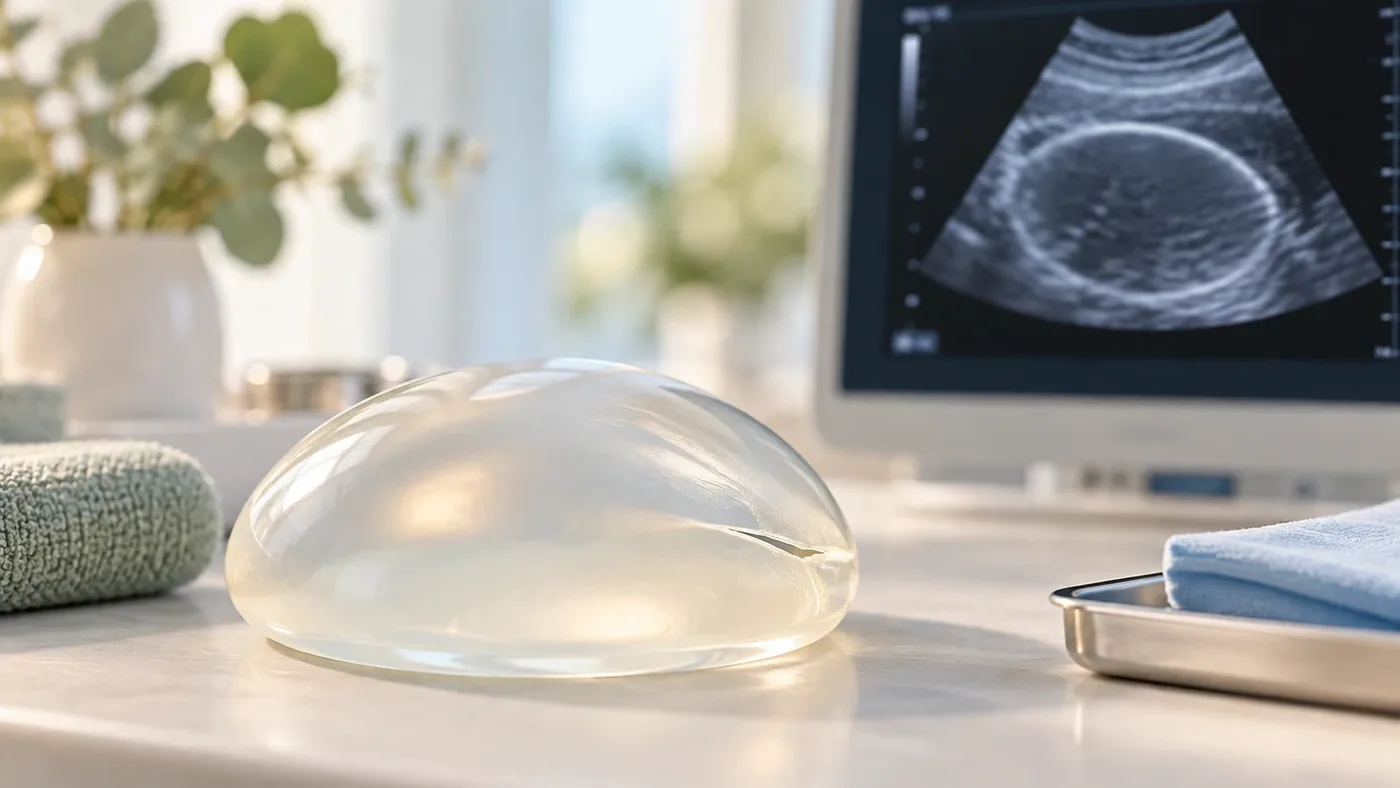
Breast implant rupture means a tear or hole in the outer shell of an implant. It is one of the known complications of breast augmentation and reconstruction, and it becomes more likely the longer an implant has been in place. Implants are medical devices that wear over time; they are not designed to last a lifetime.
What a rupture means for you depends on the type of implant. A ruptured saline implant usually deflates within days and is easy to spot. A ruptured silicone implant often causes no symptoms at all, which is why it is called a silent rupture. This guide explains the signs of each, what causes a rupture, how it is diagnosed, whether it is dangerous, and what treatment involves.
What is breast implant rupture?
Every breast implant has an outer shell made of silicone elastomer. The shell is filled either with sterile salt water (saline) or with silicone gel. A rupture is any tear or hole in that shell. With saline implants the same event is often called deflation, because the implant empties and loses its size and shape.
Saline implant rupture
When a saline implant ruptures or its valve fails, the salt water leaks out into the body. The body absorbs it, so the leak itself is not harmful. The breast gets visibly smaller and changes shape, sometimes within hours and usually over a few days. Most people notice the difference straight away.
Silicone implant rupture
Silicone gel is thick and cohesive, so when the shell tears it stays in place or seeps out slowly. The body does not absorb silicone. Modern cohesive gel implants hold together well, and the breast may look and feel the same as before. That is why a silicone rupture can go unnoticed for a long time.
Silent rupture
According to the US Food and Drug Administration (FDA), most silicone implant ruptures are silent: they cause no symptoms and do not change how the breast looks or feels. A physical examination alone may not detect them, which is why scans are used.
Intracapsular and extracapsular rupture
After implant surgery the body forms a thin layer of scar tissue around each implant, called the capsule. Where the leaked gel ends up decides the type of rupture:
- Intracapsular rupture: the gel stays inside the capsule. It is often silent.
- Extracapsular rupture: the gel moves beyond the capsule into the surrounding breast tissue, where it can form lumps.
- Gel migration: in rarer cases silicone travels further, for example to the lymph nodes in the armpit or to the chest wall. Gel that has spread is harder to remove.
Signs and symptoms of a ruptured breast implant
Signs of a ruptured saline implant
- The breast becomes smaller or flatter, often over a few days
- A visible difference in size or shape between the two breasts
- The implant feels softer, wrinkled or empty
Signs of a ruptured silicone implant
Many silicone ruptures cause none of these. When symptoms do appear, the FDA lists:
- A decrease in breast size or a change in the shape of the implant
- Hard lumps in the breast or the armpit
- Uneven breasts
- Pain, tenderness or swelling
- Tingling, numbness, burning or other changes in sensation
- A breast that becomes firmer over time, which can be a sign of capsular contracture
None of these symptoms proves a rupture on its own. The same changes can come from capsular contracture, a fluid collection or other conditions, so any new change should be checked by a doctor.
What does a ruptured breast implant look and feel like?
A ruptured saline implant looks deflated: the breast is noticeably smaller, and the skin over it may ripple or sag. A ruptured silicone implant usually looks the same as before. When it does change, people describe a breast that feels firmer, lumpier or more tender than the other one, or a shape that has become uneven or distorted. Some notice a small lump near the implant or in the armpit, where leaked gel has collected.
What causes breast implants to rupture?
The FDA lists several causes of rupture and deflation:
- Normal ageing and wear of the implant shell
- Capsular contracture, where the scar capsule tightens and squeezes the implant
- Trauma or strong pressure on the chest, such as a fall, a car accident or a seat belt injury
- Compression during a mammogram
- Damage from surgical instruments during the original operation or a later one
- Procedures on the breast, such as a biopsy or the draining of fluid
- Overfilling or underfilling of a saline implant
- Excessive handling of the implant during surgery
Rupture can happen at any time after surgery. The longer an implant has been in place, the higher the chance, which is why implants are expected to need replacing or removing at some point. Our guide on how long breast implants last explains what affects their lifespan.
How rupture is diagnosed
A doctor will start by asking about your symptoms and examining both breasts. A saline rupture is usually clear from the examination alone. A silicone rupture usually needs imaging.
- MRI: the FDA describes breast MRI as the most effective way to detect a silent silicone rupture.
- Ultrasound: the FDA accepts ultrasound as an alternative for screening people without symptoms. It is quicker, cheaper and widely available.
- Mammogram: it can show some ruptures, but it is less reliable for silicone inside the capsule. Tell the radiographer that you have implants, because special techniques reduce the pressure on them.
If you have silicone implants, the FDA recommends screening scans for silent rupture, starting some years after your first surgery and repeated at regular intervals for as long as you have the implants. The schedule can differ by implant brand, so ask your surgeon which one applies to you and keep a record of your scans.
Is a ruptured breast implant dangerous?
For most people a rupture is not an emergency, but it should not be ignored either.
A ruptured saline implant releases salt water that the body absorbs, so the main problem is the change in appearance. A ruptured silicone implant is different, because the body cannot clear leaked gel. Over time it can cause inflammation, lumps, pain, capsular contracture and a change in breast shape, and gel that spreads beyond the capsule is harder to remove.
On the wider health questions, the FDA reports that it has not found a link between silicone gel implants and connective tissue disease, breast cancer or reproductive problems. Some people with implants report symptoms such as fatigue, joint pain and brain fog, often called breast implant illness. These symptoms are not fully understood, and our article on breast implant illness covers what is known so far.
Breast implant associated anaplastic large cell lymphoma (BIA-ALCL) is a rare cancer of the immune system that can develop in the scar tissue around an implant, more often with textured implants. It is not caused by rupture, but its first signs, persistent swelling, pain or a lump near the implant, can look similar. This is one more reason to have any change checked rather than assuming it is a rupture.
Treatment for a ruptured breast implant
A ruptured implant does not repair itself. Treatment is surgery to remove it, and you then decide with your surgeon whether to replace it. Breastcancer.org advises that a ruptured silicone implant be removed without delay where possible. A ruptured saline implant can sometimes wait until you are ready for surgery, because the salt water is absorbed.
Removal and replacement
In most cases the surgeon removes the ruptured implant and, if you wish, places a new one in the same operation. If only one implant has ruptured, the surgeon may suggest replacing both, so that they match in age, size and type. This is an operation known as breast implant revision, and it is also a chance to change the size, shape or placement of the implants.
Capsulectomy
With a silicone rupture the surgeon also removes as much leaked gel as possible, and often part or all of the scar capsule around the implant, an operation called a capsulectomy. When the implant and the whole capsule are taken out together, it is called an en bloc capsulectomy. Which technique is right depends on the type of rupture, the state of the capsule and your wishes.
Removal without replacement
Some people decide not to have new implants. The breasts will then be smaller, and the skin may sag, dimple or pucker. A breast lift at the same time can improve the shape. Our pages on breast implant removal and on life after removal explain what to expect.
If your implants were placed abroad
If you had your breast augmentation in another country, rupture is handled in the same way: a check-up and a scan close to home, then a decision about surgery. A few steps make this much easier:
- Keep your implant details. Ask for your implant card, or at least the brand, model, size and fill of each implant, and the date of surgery. Your doctor and any future surgeon will need them.
- Keep your operation notes. Ask for a copy of the surgical report and discharge summary before you fly home.
- Ask about warranties. Some implant brands run a warranty programme that can cover new implants after a rupture. Check the terms for your brand.
- Plan your follow-up. Know who to contact if something changes, and keep up your screening scans at home.
If you are considering revision surgery in Turkey, our guide to breast implant revision in Turkey explains the operation, and you can compare clinics for breast implants in Turkey.
How to lower the risk of rupture
No implant lasts forever, but you can reduce some of the risks:
- Choose an experienced, board-certified plastic surgeon and an implant from an established manufacturer.
- Ask your surgeon which implant type, size and placement suit your body. Our guides on types of breast implants and on placement over or under the muscle help you prepare for that conversation.
- Keep up your screening scans if you have silicone implants.
- Tell anyone doing a mammogram, biopsy or other breast procedure that you have implants.
- Never let anyone squeeze the breast hard to break up a tight capsule, a technique known as closed capsulotomy. The FDA advises against it because it can rupture the implant.
- Protect your chest during contact sports, and see a doctor after any significant blow to the chest.
Can a ruptured breast implant kill you?
How do I know if my breast implant has ruptured?
How long can you leave a ruptured silicone implant?
Is breast implant rupture an emergency?
Can a ruptured implant make you sick?
Can a mammogram rupture a breast implant?
What does a ruptured silicone implant feel like?
Do both implants need replacing if one ruptures?
Medical disclaimer
This article is informational, not medical advice. Always consult a licensed physician about your individual case before booking any procedure.