Blog
Dental implant brands to avoid: the red flags that matter more than a name

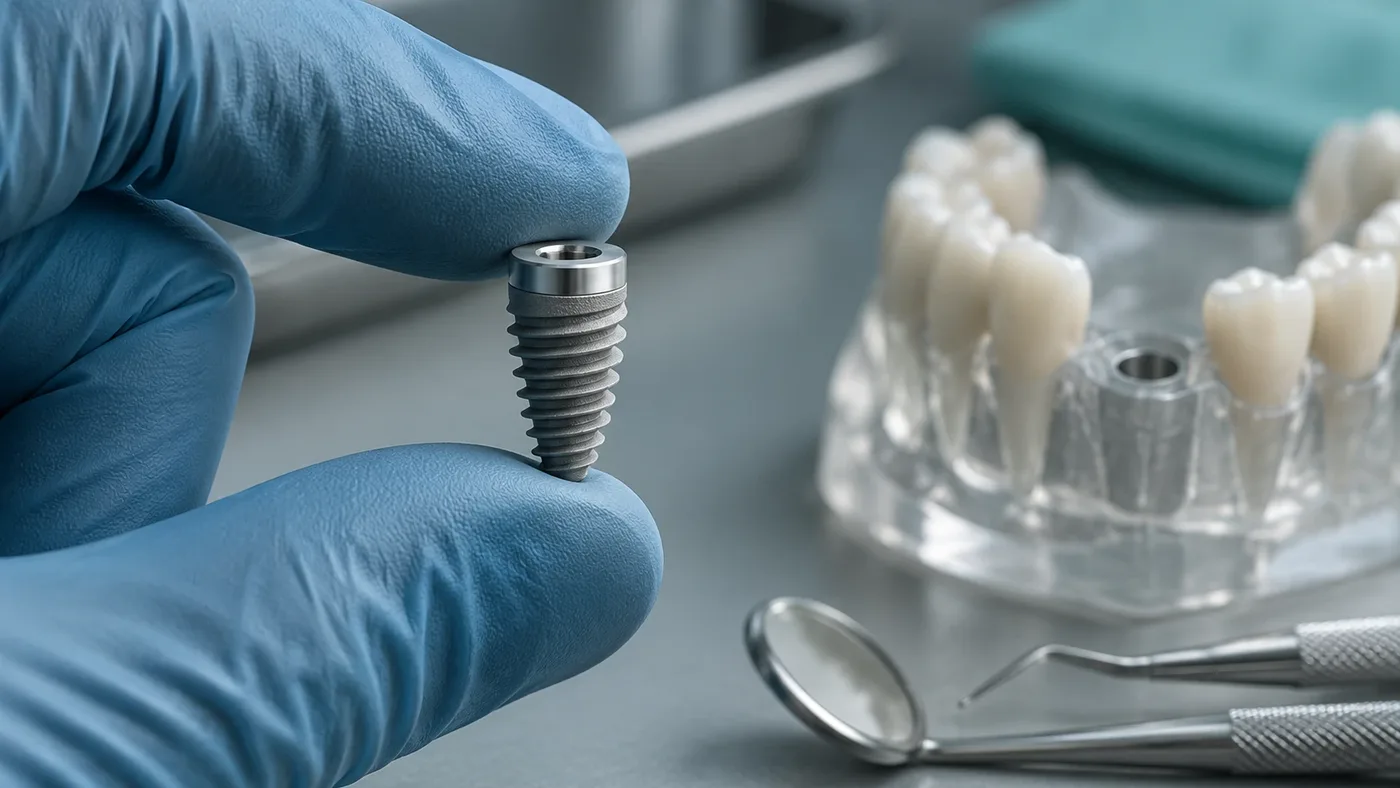
If you are planning dental implants, sooner or later someone will tell you that the brand matters. Then you search for dental implant brands to avoid and find lists that name one company after another, often written by clinics that sell a different one.
The honest answer is more useful than a blacklist. Few implant brands are bad by name. What puts your treatment at risk is an implant system you cannot trace, that has little or no published research behind it, that has no recognised regulatory clearance, or whose parts may not be available when you need a repair years from now. This guide explains how to spot those red flags, what to ask your dentist, and what to keep in your records.
Dental implant brands to avoid: the short answer
- Avoid any implant your dentist cannot name, or whose brand, model and batch they will not write down for you.
- Avoid systems with no independent clinical research behind them, or only the manufacturer's own marketing.
- Avoid implants without recognised regulatory clearance where they are sold, such as a CE mark in Europe or FDA clearance in the United States.
- Avoid copies of well-known designs sold by companies that have not tested them, often called clone implants.
- Avoid systems whose parts are hard to buy outside one clinic or one country, if you will need aftercare at home.
- Remember that the dentist's skill, planning and aftercare usually matter more than the logo on the box.
Does the dental implant brand really matter?
Yes, but less than most adverts suggest. A dental implant is a small titanium or zirconia screw placed in the jawbone to act as a tooth root. On top of it sits an abutment, the connector, and on top of that a crown, bridge or denture. The implant, the abutment and the screws are made to fit each other precisely, and each manufacturer has its own design and connection.
That is why the brand matters in a few specific ways:
- Research. Some systems have been studied in patients for many years in independent universities. Others have little or no published follow-up.
- Quality control. A recognised regulatory clearance means the maker has had to show evidence about materials, sterility and manufacturing.
- Parts and repairs. Crowns get replaced, screws loosen and abutments sometimes break. If the original parts are hard to get, a simple repair can become a difficult one.
- Fit. Laboratory studies comparing original and non-original abutments have generally found that original parts fit the implant more precisely and resist micro-movement better, although some non-original parts perform similarly.
What the brand cannot do is make up for poor planning, a rushed placement, an implant put in the wrong position, gum disease left untreated or a patient who does not keep up with cleaning and check-ups. Implant failure usually has several causes at once, and most of them have nothing to do with the logo.
Red flags: the implants worth avoiding
An implant nobody will name
If a clinic cannot or will not tell you the brand and model of the implant before treatment, treat that as a warning sign. Every implant comes in sterile packaging with a label showing the maker, the model, the size and a batch or lot number. Many clinics stick these labels into your record. You are entitled to ask for a copy.
Without this information, a dentist elsewhere may not know which parts fit your implant, and you would have no way of finding out if that product were ever recalled.
No published clinical research
Well-documented implant systems have studies in patients, published in peer-reviewed journals by researchers who do not work for the manufacturer, with follow-up over many years. Ask your dentist which research supports the system they plan to use. A good answer names studies or a track record. A weak answer points only to a brochure.
New brands are not automatically bad, and every established system was once new. But when you have a choice, a long record in patients gives you more certainty than a promise.
No recognised regulatory clearance
Dental implants are regulated medical devices. In the European Union they are sold under the Medical Device Regulation and carry a CE mark. In the United States, the FDA treats root-form dental implants as moderate-risk devices that need clearance through its premarket notification process. In Turkey, medical devices must be registered in the national product tracking system run by the Turkish Medicines and Medical Devices Agency.
Clearance does not tell you that one implant is better than another. It does tell you that the maker had to meet a recognised standard to sell it. An implant with no clearance anywhere, or one bought through an unofficial route, is one to avoid.
Clone implants
Some companies copy the shape of a well-known implant and sell it at a much lower price, sometimes claiming it is compatible with the original. The copy may look identical, but it has not been through the same testing, and small differences in the surface or the connection can matter. A compatible claim is not the same as the original maker's parts and research.
Parts you cannot get at home
If you have implants placed abroad, think about what happens if you need a repair at home. Widely used international systems are stocked by dental suppliers in most countries. Smaller brands sold in only one region can be harder to work with, and some dentists will not touch an implant system they do not know.
Ask whether the brand is sold in your home country, and whether your own dentist is willing to look after it.
A price that only makes sense with corners cut
Implant prices differ for good reasons, such as country, clinic costs and the system used. A price far below everything else you have seen deserves a question: which implant is it, which abutment and crown come with it, and is bone grafting or a temporary tooth extra? The implant brand is one of the places a low price can come from.
Well-known implant brands: what they have in common
There is no official ranking of implant brands, and we do not publish one. What the long-established international systems tend to share is easy to check:
- They have been studied in patients for many years, in research published by independent groups.
- They hold regulatory clearance in major markets.
- Their parts are stocked by suppliers across many countries.
- The company has been around long enough to keep making parts for older implants.
Names you will often see in this group include Straumann, Nobel Biocare, Dentsply Sirona and Zimmer Biomet. Several Korean and European makers, such as Osstem, MegaGen and Neodent, are also widely used and studied. This is not a list of recommendations. It shows the kind of track record worth asking about, whichever system your dentist uses.
| Question | Reassuring answer | Red flag |
|---|---|---|
| Which implant brand and model will you use? | Named in writing on your treatment plan | Vague, or the brand is decided later |
| What research supports it? | Independent studies with long follow-up | Only the maker's brochure |
| Is it cleared for sale? | CE mark, FDA clearance or national registration | No clearance, or bought unofficially |
| Will I get the label with the batch number? | Yes, in your records | No, or not sure |
| Are the abutment and crown parts original? | Original or a named, tested system | Unknown or mixed parts |
| Can a dentist at home get parts? | Sold through suppliers in your country | Only available at this clinic |
Scroll sideways for the full table
Questions to ask your dentist before treatment
- Which implant brand, model and abutment will you use, and can you put it in writing?
- Why did you choose this system for my case?
- How many of these implants have you placed, and how long have you used this system?
- Will I get the implant labels or a record with the batch numbers?
- Are the abutments and screws from the same maker as the implant?
- If something goes wrong after I go home, who will look after it, and can a dentist at home get the parts?
- What does the price include, and what would cost extra?
A dentist who welcomes these questions is usually a good sign. Our guide to choosing a dentist for dental implants covers the dentist side in more detail.
Why the dentist matters more than the brand
A good implant placed in the wrong position, in bone that has not been assessed properly, or in a mouth with untreated gum disease can still fail. A well-documented implant in skilled hands, with good planning, scans and aftercare, has a much better chance of lasting.
When you compare clinics, look at the whole picture:
- The dentist's training and experience with implants.
- Whether they take a CT scan before planning.
- Whether gum disease and other problems are treated first.
- Whether bone grafting is offered when the bone is too thin.
- What aftercare, check-ups and warranty terms are offered, in writing.
- How easy it is to reach the clinic after you go home.
Signs an implant may be in trouble
Whatever the brand, see a dentist if you notice:
- An implant tooth that feels loose or moves when you bite.
- Bleeding, swelling or pus around the implant.
- Pain, or a bad taste that does not go away.
- Gum shrinking back to show metal.
- A crown that keeps coming loose.
Our guides on a loose implant crown and preventing implant infection explain what to look for and what helps.
Choosing dental implants abroad
Many people travel for dental implants because treatment at home is expensive. The same rules apply abroad: ask for the brand in writing, check how you will get aftercare at home, and make sure the plan explains every stage of treatment. Our dental implants guide covers the procedure, and our page on dental implants in Turkey explains what to expect there.
Which dental implant brands should I avoid?
Are cheap dental implants bad?
What are clone implants?
Does the implant brand affect how long it lasts?
How do I find out which implant brand I have?
Can any dentist repair any implant?
Is an implant with a CE mark or FDA clearance always good?
Medical disclaimer
This article is informational, not medical advice. Always consult a licensed physician about your individual case before booking any procedure.