Blog
Hair transplant after 20 years: what lasts, what changes and what can be fixed

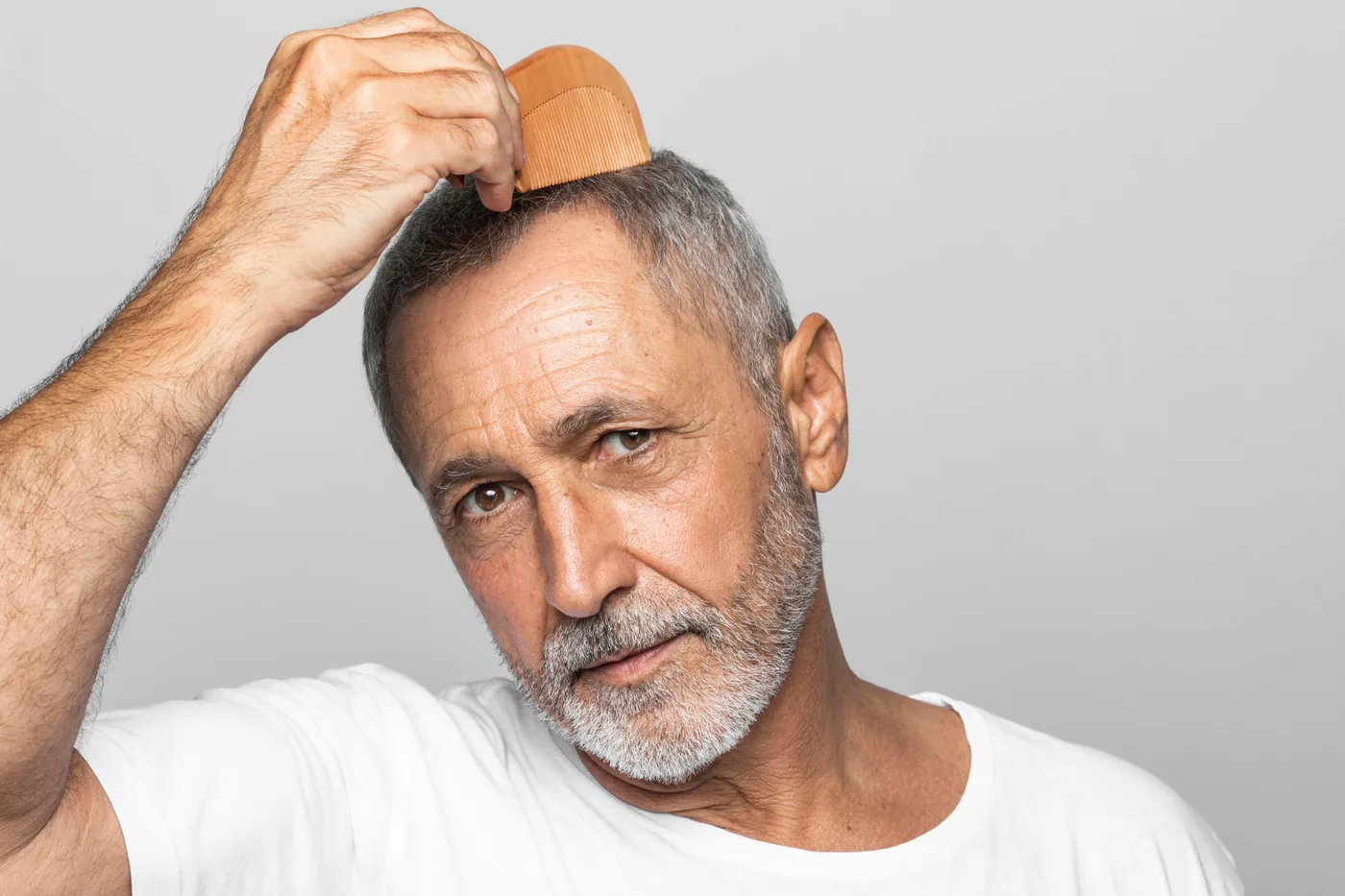
The short answer: transplanted hair usually keeps growing for decades, because follicles taken from the back and sides of the head tend to keep their resistance to pattern hair loss after they are moved. What changes over that time is everything around them. The native hair keeps thinning, the transplanted hair ages like the rest of your hair, the donor area can thin, and surgical techniques have changed a great deal since many of today's long-term patients had their operation. Whether a transplant still looks good decades later depends less on the grafts than on how it was planned.
Do hair transplants last forever?
A hair transplant moves living follicles from the donor area, usually the back and sides of the scalp, to where hair has thinned. Hair in the donor area is generally resistant to DHT, the hormone behind pattern hair loss, and transplanted follicles tend to keep that resistance in their new place. Surgeons call this donor dominance, and it is the reason a transplant can last a lifetime.
Long-lasting is not the same as unchanged, though. Transplanted hair is still hair: it goes through growth cycles, it ages, and in some people it thins a little over time. There is also less published research on results decades later than on the first years after surgery, so much of what is known comes from surgeons who have followed their own patients over a long period. The honest answer to "is a hair transplant permanent?" is that the moved hair usually stays, while the head around it keeps changing.
What a hair transplant looks like decades later
A transplant that has aged well usually has:
- a hairline that still suits the person's age and face
- transplanted hair that blends with the native hair around it
- donor scars that stay hidden under normal-length hair
- density that looks natural rather than thick in one place and thin in another
A transplant that has aged badly tends to show one or more of these:
- an island of transplanted hair at the front with thinning or baldness behind it
- a hairline that looked right on a young face but sits too low on an older one
- visible scars at the back or sides, especially if the donor hair has thinned
- the pluggy, doll's-hair look of older techniques
Most of these problems are not caused by grafts failing. They come from the way the transplant was designed, or from hair loss that carried on around it.
What changes over the years
The native hair keeps thinning
Pattern hair loss is progressive. A transplant moves hair but does not stop the rest from thinning, so the gap between transplanted and native hair can widen over time. The result can be a dense hairline with a thin zone behind it, which looks less natural than an even recession. This is why many surgeons recommend medication to protect the native hair, and why the original plan should allow for future loss.
The transplanted hair ages too
Transplanted hair turns gray at the same pace as the rest of your hair, and it can become finer and slower-growing with age. None of that is a sign of failure. It is simply hair getting older, and a well-planned transplant ages along with the face.
The donor area can thin
In some people, the hair at the back and sides also thins with age. That reduces the supply available for any future procedure and can expose scars that used to be hidden. Taking too many grafts in the first place makes this worse. Our guide on how to avoid overharvesting explains the warning signs.
Scars can become more visible
FUT leaves a linear scar across the back of the head, and FUE leaves many small round marks. Both are usually hidden by surrounding hair. They become easier to see if the donor hair thins or if you start wearing your hair much shorter than you did when you had the operation.
Your face and expectations change
A hairline designed for a young face can look out of place on an older one, and people's taste in hairstyles changes too. Someone happy with modest coverage at one age may want more density, or a different look, years later.
If your transplant was done long ago: hair plugs
Many people asking how a transplant looks after decades had their surgery when the technique was very different. Early hair transplants used larger round grafts, often called hair plugs, each carrying a cluster of many hairs. Planted in rows, they could look like tufts or doll's hair, especially at the hairline and once the hair around them thinned.
Modern techniques move hair in its natural groupings. FUT and FUE both transplant follicular units, small groups of a few hairs each, placed individually at the angle the hair naturally grows. That is why a modern transplant can be hard to spot, and why an old plug transplant usually looks dated now. Our article on the history of hair transplant surgery traces how the techniques changed.
Can an old hair transplant be repaired?
Often it can be improved, though rarely made to look as if it never happened. The options depend on what went wrong and how much donor hair is left:
- Softening the hairline. Small follicular unit grafts are placed in front of and between old plugs so the edge looks natural.
- Removing or reducing plugs. Old grafts can be taken out, split into follicular units and replanted in a more natural pattern.
- Treating the donor scar. FUE grafts can be placed into an old strip scar, and scalp micropigmentation can camouflage scars. Our comparison of scalp micropigmentation vs hair transplant covers when it helps.
- Protecting what is left. Medication can slow the thinning of native hair so a repair is not overtaken by new loss.
Repair work is harder than a first transplant. Scar tissue can affect how well new grafts grow, and the donor supply may already be limited, so it calls for a surgeon who does this kind of work regularly. Our article on how to avoid a failed hair transplant looks at the causes of poor results.
Will you need a second transplant?
Many people have more than one procedure over their lifetime. The usual reason is not that the first transplant failed, but that hair loss carried on into areas that were not treated the first time, such as the crown. A second session can also add density or refine a hairline.
Whether it is possible depends on the donor area. Each graft taken leaves its spot without a follicle for good, so a surgeon should look at how much donor hair you have left before planning more work. For how results tend to look earlier on, see our guide to how a hair transplant looks after the first decade.
Planning a transplant that still looks right decades later
If you are considering a transplant now, the long view is the most useful one to take. Ask the surgeon:
- Where will my hairline sit, and how will it look as my hair keeps thinning and my face ages?
- How much donor hair do I have, and how much will this procedure use?
- Do you recommend medication for the hair you are not transplanting?
- What would a second procedure look like, if I needed one later?
- Is it worth waiting until my hair loss has settled?
A conservative hairline and a careful donor plan usually age better than maximum density on day one. A transplant also has trade-offs and risks of its own, which we cover in our guides to hair transplant disadvantages and hair transplant risks. To see how the procedure works today, read our guide to hair transplant, or compare clinics on our page about hair transplant in Turkey.
How does a hair transplant look after 20 years?
Is a hair transplant permanent?
Does transplanted hair turn gray?
Can old hair plugs be fixed?
Is it too late to have a hair transplant later in life?
Medical disclaimer
This article is informational, not medical advice. Always consult a licensed physician about your individual case before booking any procedure.