Blog
Hair transplant alternatives: non-surgical options and what they can do

The short answer: there is no way to move hair into a bald area without surgery, so every alternative to a hair transplant does one of two other jobs. Some treatments slow hair loss or thicken the hair you still have, such as minoxidil, finasteride, PRP, low-level laser therapy and microneedling. Others change how your hair looks without growing anything, such as scalp micropigmentation, hair systems, concealers and a new haircut. Which of them suits you depends on why your hair is thinning, how much of it is left, and how much ongoing effort you are willing to put in.
First, find out why your hair is thinning
Most thinning in men, and a good share in women, is pattern hair loss, which is inherited and gradual. But hair can also thin after an illness, a stressful period or a crash diet, with an iron deficiency or a thyroid problem, as a reaction to some medicines, or because of conditions such as alopecia areata. Some of these settle once the cause is treated, and none of them is helped by a transplant.
That is why the first step is a proper look at your scalp by a doctor or dermatologist, often with a blood test. It tells you whether you need treatment at all, and which kind. If you have pattern hair loss, our guide to the stages of male pattern hair loss helps you see where you are.
Hair transplant alternatives at a glance
Treatments that work on your own hair
- Minoxidil, a lotion, foam or tablet that can slow hair loss and thicken thinning hair.
- Finasteride and dutasteride, prescription medicines for men that slow pattern hair loss.
- PRP, injections made from your own blood that may help thinning hair in some people.
- Low-level laser therapy, light-emitting caps and combs used at home or in a clinic.
- Microneedling, tiny needles used on the scalp, usually alongside minoxidil.
Options that change how your hair looks
- Scalp micropigmentation, a cosmetic tattoo that mimics stubble or adds the look of density.
- Hair systems, also sold as non-surgical hair replacement, which cover thinning areas with a hairpiece.
- Concealers and styling, such as hair fibers, tinted sprays and a shorter or shaved cut.
Minoxidil
Minoxidil is applied to the scalp as a lotion or foam and is sold without a prescription in many countries. Some doctors also prescribe it as a low-dose tablet, which is an off-label use. It is thought to work by lengthening the growth phase of the hair and enlarging thinning follicles. It tends to help most on the crown and on hair that is thinning rather than gone, and it does not bring back hair on areas that have been bald for a long time.
It needs patience and commitment. Results build up over many months, some people shed more hair at the start, and the benefit fades if you stop. Side effects include an itchy or flaky scalp and, particularly with tablets, unwanted hair growth on the face or body. Tablets can also affect blood pressure and heart rate, so they need a doctor's supervision.
Finasteride and dutasteride
Finasteride is a prescription medicine that lowers the level of DHT, the hormone that shrinks hair follicles in pattern hair loss. It is usually taken as a tablet, and a topical version is available in some countries. For many men it slows hair loss, and for some it thickens hair that has thinned. Dutasteride works in a similar way and is sometimes prescribed for hair loss, often off-label.
Like minoxidil, these medicines only work while you take them. Some men report sexual side effects or changes in mood, so this is a decision to make with a doctor who knows your history. They are not suitable for anyone who is or may become pregnant. If you are weighing medication against surgery, our article on having a hair transplant without finasteride covers how the two fit together.
Women have different options. Topical minoxidil is widely used, and doctors sometimes prescribe other medicines, such as spironolactone, off-label. Our page on hair transplant for women explains when surgery is and is not an option.
PRP for hair loss
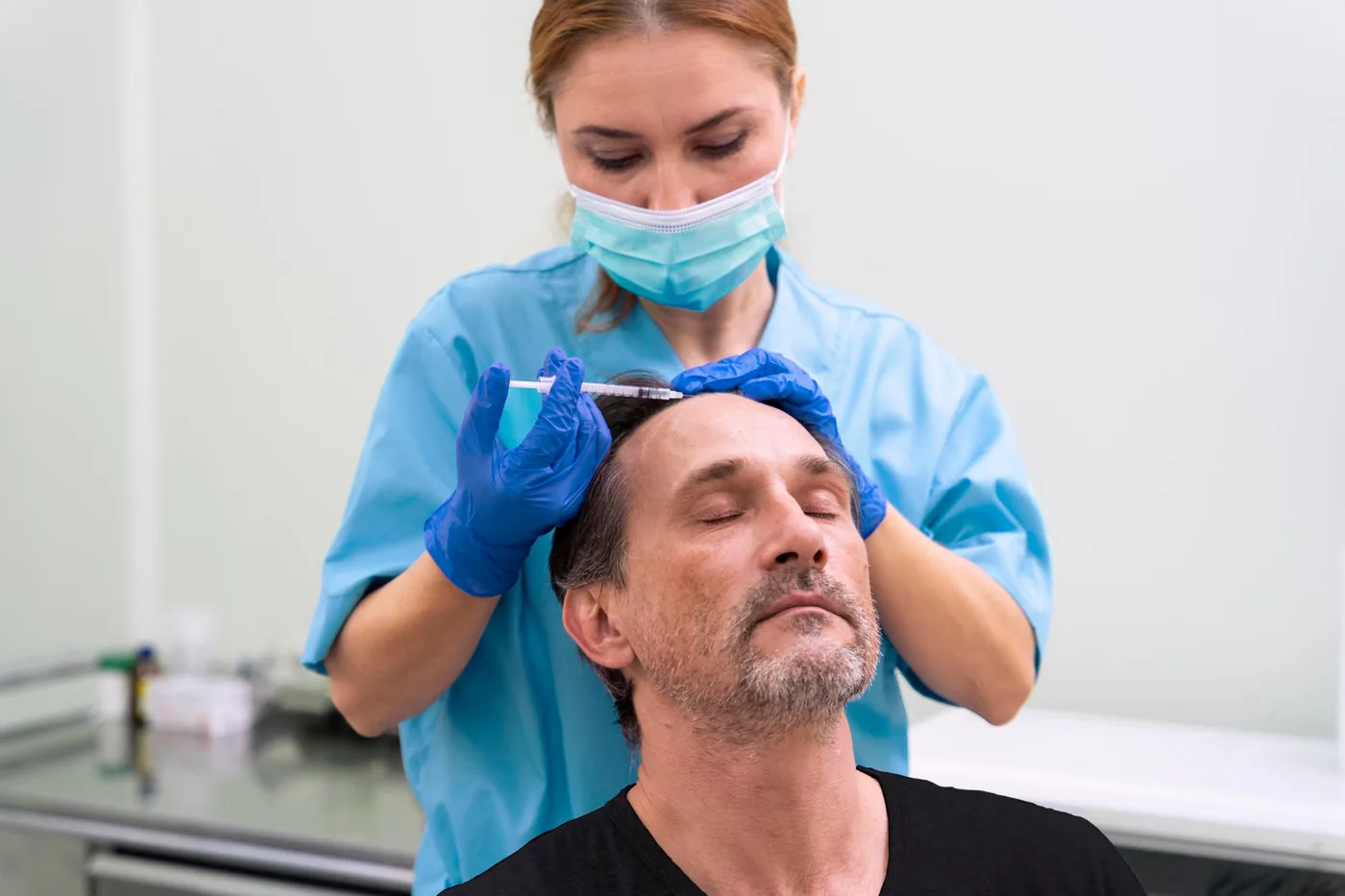
PRP stands for platelet-rich plasma. A small amount of your blood is taken, spun in a centrifuge to concentrate the platelets, and injected into the thinning areas of your scalp. Platelets carry growth factors, and the idea is that they encourage weak follicles to grow thicker hair. Treatment is usually a course of sessions followed by top-ups.
The evidence is mixed. Some studies report improved density in pattern hair loss, but clinics use different methods and results vary from person to person. PRP works on follicles that are still alive, so it cannot fill an area that is already bald. Side effects are usually limited to soreness, tenderness and sometimes a headache after the injections.
People often compare a hair transplant vs PRP, but the two do different things: PRP may thicken existing hair, while a transplant moves hair to where it has gone. Some clinics use PRP alongside a transplant. Our page on PRP for hair explains the treatment, and our comparison of hair mesotherapy vs PRP covers a similar injection treatment.
Low-level laser therapy
Low-level laser therapy uses red light from caps, helmets, bands or combs, at home or in a clinic. The light is thought to stimulate follicles and extend the growth phase. Some people see a modest improvement in thickness, but it takes regular use over many months, and the devices cost money up front. It does not regrow hair on bald areas, and it is often used together with medication rather than on its own.
Microneedling
Microneedling rolls or presses tiny needles into the scalp to create small injuries that the skin then repairs. It has mostly been studied alongside minoxidil, where it may improve the response. It can be done in a clinic or at home, but a home device must be kept clean to avoid infection, and it should not be used on an irritated or broken scalp.
Scalp micropigmentation
Scalp micropigmentation is a cosmetic tattoo. A practitioner places thousands of tiny dots of pigment in the scalp to look like hair follicles. On a shaved head it creates the look of a close buzz cut; on thinning hair it reduces the contrast between hair and scalp, so the hair looks denser. It grows no hair, it fades over the years and needs touch-ups, and for the shaved look you have to keep your hair very short. Our comparison of scalp micropigmentation vs hair transplant explains when each makes sense.
Hair systems and the "non-surgical hair transplant"
There is no such thing as a hair transplant without surgery. When a clinic or salon advertises a non-surgical hair transplant, it almost always means a hair system: a thin base of mesh or polymer with real or synthetic hair, bonded to the scalp with tape or adhesive. You may also see it called non-surgical hair replacement or hair restoration without surgery.
A good hair system gives immediate coverage at any density you like, which no treatment can match. The trade-off is upkeep. It has to be removed, cleaned and refitted regularly, replaced when it wears out, and the cost adds up over the years. Some people find the adhesive irritates the skin, heat and sweat can loosen it, and a poorly fitted system can pull on the hair underneath. For women, wigs and toppers do a similar job.
Concealers, styling and shaving
Hair fibers that cling to existing hair, tinted sprays and thickening shampoos make thinning hair look fuller for a day. A good barber can choose a cut that hides a receding hairline or thin crown, and many men decide to shave their heads altogether. These options are cheap, quick and easy to stop, but they treat nothing.
Supplements, oils and newer treatments
Supplements such as biotin, zinc or iron help hair only if you are short of them, which a blood test can show. Oils and herbal products, such as rosemary oil and saw palmetto, are popular, but the evidence for them is limited. If you try them, tell your doctor, especially if you take other medicines.
You may also come across treatments described as stem cell, exosome or hair cloning therapies. These are still being researched and are not established treatments for hair loss. Be wary of any clinic that sells them as proven.
When a hair transplant still makes sense
Alternatives are often the right first step, but they have a limit: none of them can put hair back where follicles have gone. A transplant can, as long as you have enough donor hair at the back and sides of the head and your hair loss has slowed. Many people end up combining the two, using medication to protect their remaining hair and a transplant to restore the hairline or crown.
Surgery has its own trade-offs, which we set out in our guide to hair transplant disadvantages. To see how the procedure works and who it suits, read our guide to hair transplant, or compare clinics on our page about hair transplant in Turkey.
How to choose the right alternative
Four questions narrow it down:
- Why is your hair thinning? If it is not pattern hair loss, treating the cause comes first.
- Do you want to keep hair or change how it looks? Medication, PRP and laser therapy work on living follicles. Micropigmentation, hair systems and concealers work on appearance.
- How much hair is left? The more hair you have, the more a treatment has to work with. Large bald areas need either a transplant or a cosmetic option.
- What can you keep up? Most alternatives work only while you continue them, so the effort and cost over time matter as much as the first result.
A doctor who treats hair loss can help you weigh these against your own scalp, history and goals.
Is there a non-surgical hair transplant?
What can I use instead of a hair transplant?
Can PRP replace a hair transplant?
Do I have to keep using minoxidil or finasteride?
Can women use these alternatives?
Medical disclaimer
This article is informational, not medical advice. Always consult a licensed physician about your individual case before booking any procedure.