Scoliosis treatment in Turkey

Scoliosis is a sideways curve of the spine with rotation, and most of it never needs an operation. The ladder is observation, then bracing while a child is growing, then surgery only for curves that are large or clearly worsening. A brace holds a curve rather than straightens it. This page explains what changes the decision, why this is the hardest operation to have abroad, and what drives the price in Turkey.

Read more
Medically reviewed by Flymedi medical content team. Written by Flymedi medical content team.
Updated 23 July 2024 · Editorial standards

Scoliosis treatment in Turkey at a glance

Figures are ranges, not promises. Suitability needs an individual assessment by a doctor.

Scoliosis treatment clinics in Turkey

Each clinic sets its own price, so check what the price includes before comparing two of them.

Clinics are scored and ordered by Flymedi. How ranking works.

Patient stories

Patients treated through Flymedi, in their own words. Nothing loads or plays until you press play.

Alex

Septoplasty

Spoken in EnglishSource: YouTube

Laura

Dental implants

Spoken in EnglishSource: YouTube

Louren

Gastric sleeve

Spoken in EnglishSource: YouTube

Mark Chambarlein

Hair transplant

Spoken in EnglishSource: YouTube

Josephine Nyella

Limb lengthening surgery

Spoken in EnglishSource: YouTube

Youssef

Rhinoplasty

Spoken in EnglishSource: YouTube

Helen Totsis

Dental implants

Spoken in EnglishSource: YouTube

Jacqueline Davies

Gastric sleeve

Spoken in EnglishSource: YouTube

Anıl Chopra

FUE hair transplant

Spoken in EnglishSource: YouTube

Damon

Gynecomastia

Spoken in EnglishSource: YouTube

Why are these clinics ranked this way?

Clinics are scored from patient reviews and ordered by Flymedi. The facts behind each position are listed below. How ranking works.

RankClinicFlymediScoreLead doctorExperienceFromWhy it is ranked here
1Luna Clinic Turkey9.432 doctorsNot listedPrice on requestMost reviewed on this page (888 reviews). Declares TURSAB, MOH, ESCAD, TTB. 32 doctors listed.
2Istanbul European Clinic9.323 doctorsNot listedPrice on requestDeclares TURSAB, MOH, ASAPS, ESCAD, ESHRS, ISAPS, TTB. 23 doctors listed.
3Medipol Mega University Hospital9.44 doctorsNot listedPrice on requestDeclares JCI. 4 doctors listed.
4Acibadem Healthcare Group9.54 doctorsNot listedPrice on request4 doctors listed.
5Medical Park Gaziosmanpasa Hospital9.74 doctorsNot listedPrice on requestDeclares JCI, CEN, EMBT, ISCT, CIBMTR. 4 doctors listed.
6Koç Healthcare Institutions9.6Spinal surgery30 yearsPrice on requestDeclares JCI. 4 doctors listed.
7Acibadem Maslak Hospital9.64 doctorsNot listedPrice on requestDeclares JCI, ISO 9001:2008. 4 doctors listed.
8Medical Park Antalya Hospital9.74 doctorsNot listedPrice on requestDeclares JCI, CEN, EMBT, ISCT, CIBMTR. 4 doctors listed.
9Florence Nightingale Istanbul9.5Spinal surgery37 yearsPrice on requestDeclares JCI, OHSAS 18001, ISO 9001:2000, TÜV SÜD, ISO 14001. 4 doctors listed.
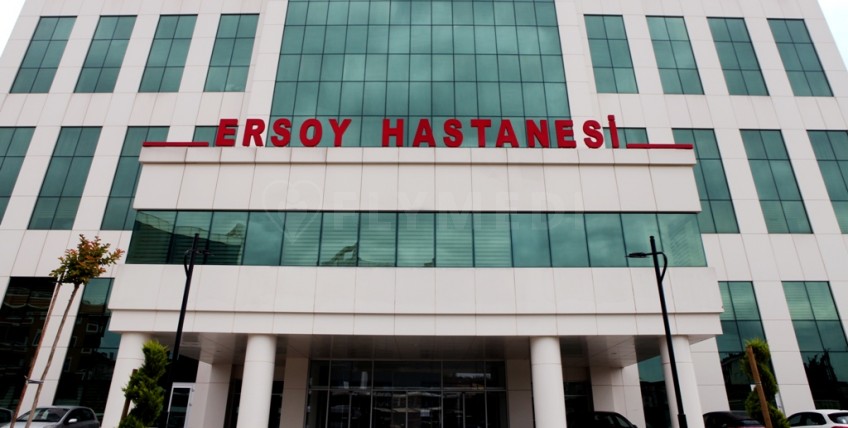
10Ersoy Hospital9.74 doctorsNot listedPrice on requestDeclares ISO 9001:2008. 4 doctors listed.
1Luna Clinic Turkey · 9.4
Most reviewed on this page (888 reviews). Declares TURSAB, MOH, ESCAD, TTB. 32 doctors listed.
2Istanbul European Clinic · 9.3
Declares TURSAB, MOH, ASAPS, ESCAD, ESHRS, ISAPS, TTB. 23 doctors listed.
3Medipol Mega University Hospital · 9.4
Declares JCI. 4 doctors listed.
4Acibadem Healthcare Group · 9.5
4 doctors listed.
5Medical Park Gaziosmanpasa Hospital · 9.7
Declares JCI, CEN, EMBT, ISCT, CIBMTR. 4 doctors listed.
6Koç Healthcare Institutions · 9.6
Declares JCI. 4 doctors listed.
7Acibadem Maslak Hospital · 9.6
Declares JCI, ISO 9001:2008. 4 doctors listed.
8Medical Park Antalya Hospital · 9.7
Declares JCI, CEN, EMBT, ISCT, CIBMTR. 4 doctors listed.
9Florence Nightingale Istanbul · 9.5
Declares JCI, OHSAS 18001, ISO 9001:2000, TÜV SÜD, ISO 14001. 4 doctors listed.
10Ersoy Hospital · 9.7
Declares ISO 9001:2008. 4 doctors listed.

Read our full clinic ranking policy

Scoliosis treatment in Turkey

Scoliosis is a sideways curve of the spine with a rotation in it. Most of it is mild, most of it is found in adolescence, and most of it never needs an operation. The management is a ladder: watch and measure, brace while a child is still growing, and operate only for curves that are large or clearly getting worse.

Two facts decide almost everything that follows. In a child, how much growing is left determines how likely a curve is to progress. In an adult whose growth has finished, a moderate curve usually progresses slowly if at all, which changes the urgency completely and should change the sales pitch with it.

Where the curve is going matters more than its size today

Scoliosis is judged on a series of measurements over time, not on one. A curve that has not changed across repeated x-rays in someone who has stopped growing is a different situation from the same measurement in a twelve year old with years of growth ahead. That is why the first honest answer to most enquiries is monitoring rather than treatment.

So before agreeing to anything, ask what your own previous measurements were and over what period, and how much growth remains. A clinic that proposes an operation without asking for the earlier films is not managing scoliosis, it is quoting for it.

  • Mild curve, growth finished

    Usually observation. Progression after growth is slow in most people, and the honest answer is often that nothing needs doing now.
  • Growing child, curve progressing

    The situation where bracing has a role. The aim is to hold the curve while growth completes, and wearing it as prescribed is what makes it work.
  • Large or clearly worsening curve

    Where surgery is discussed. Fusion straightens the spine partially and stiffens the fused levels permanently, which is a trade rather than a fix.
  • Adult with pain and imbalance

    A different problem from adolescent scoliosis. Surgery here is aimed at pain, balance and nerve symptoms rather than at appearance, and it is bigger surgery in an older spine.

For a herniated disc rather than a curve, see microdiscectomy; for canal narrowing, laminectomy. For the wider orthopaedic offering, see orthopedics in Turkey.

Why this is the hardest operation to have abroad

Scoliosis correction is major spinal surgery, usually in a teenager or a young adult, lasting many hours, with implants along much of the spine and a real risk to the spinal cord. It requires intraoperative neuromonitoring with a trained technician, blood availability, a paediatric or deformity trained team, and an intensive care bed if it is needed.

It also requires follow up measured in years. Radiographs, checks on the implants, and attention to the segments above and below the fusion, which carry more load afterwards. A short trip cannot deliver the second half of that, so if you are considering it abroad, the questions are about monitoring, the team and who looks after the next five years, not about the price of the operation.

How the operation goes

  1. Assessment with the whole history

    Previous x-rays, when they were taken, growth stage, and a clinical examination including a neurological check. A single new film is not enough to decide on surgery.
  2. Deciding the levels

    How much of the spine is included is the decision that determines how much movement is lost. Ask which levels and why, and what would be different with one level fewer.
  3. Anaesthetic and monitoring

    A long general anaesthetic with continuous spinal cord monitoring. Ask explicitly whether neuromonitoring is used and who runs it.
  4. The correction

    Screws and rods correct and hold the curve while bone graft fuses the segments. The correction is partial by design, because forcing more is how nerves get injured.
  5. The first days

    Pain control, getting up, and checking neurological function. Ask what happens if a monitoring change occurs during surgery, because there is a protocol for that.
  6. Years, not weeks

    Radiographs at intervals, return to sport in stages, and long term awareness of the levels next to the fusion. Agree who does this before you fly.

Risks worth understanding

  • Neurological injury. Rare in experienced hands and the reason for neuromonitoring, but it is the risk that makes this operation different from most.
  • Blood loss. Significant in long deformity operations. Ask what is planned for it.
  • Infection. Including late infection around implants, which can appear years afterwards and needs someone who knows what was implanted.
  • Implant problems and failure of fusion. Screws can loosen and rods can break if the fusion does not take. It shows up on follow up radiographs, which is why follow up matters.
  • Loss of movement. Permanent in the fused levels. It is the trade being made, and it should be described in those terms rather than glossed over.
  • Adjacent segment problems. The mobile levels next to a long fusion take more load and can wear faster over decades.

Having it done in Turkey

  • Send the previous x-rays, not just the latest. Progression over time is the whole argument for or against surgery, and a clinic that does not ask for them has not assessed the case.
  • Ask about neuromonitoring by name. Whether it is used routinely, who operates it, and what the protocol is if the signal changes.
  • Ask who the surgeon is and what they are trained in. Deformity surgery is a subspecialty, and in a child it is a paediatric one.
  • Ask how long you must stay. And what happens with wound checks, pain control and the first radiograph before you travel.
  • Agree the five year follow up. In writing, naming who does it and where. This is the part that a package abroad does not usually contain.
  • Take the implant record home. Manufacturer, model, levels and dates. Nobody can manage a late problem without it.

What drives the price in Turkey

  • How many levels are fused. The main driver, because it determines the implants, the operating time and the recovery.
  • The implants themselves. Screws, rods and graft material are a large part of the cost, and the manufacturer belongs in your records.
  • Intraoperative neuromonitoring. It should be included rather than optional. If it is priced as an extra, ask what happens if you decline it.
  • Hospital and intensive care. Length of stay and level of care, which for a long deformity case is not a routine ward question.
  • Imaging and follow up. Pre-operative imaging, and how many post-operative radiographs and reviews are covered before you fly.

The clinic list on this page shows each clinic's current price with a note on what it includes. For instalments, see payment plans. For other spinal conditions, see microdiscectomy and laminectomy.

What non surgical treatment can and cannot do

  • Bracing holds, it does not correct. And it works only while a child is growing, and only if it is actually worn for the hours prescribed.
  • Specific scoliosis physiotherapy has a role. Schroth and similar approaches are used alongside bracing and observation. They are not a substitute for either.
  • General exercise is good for you and does not change the curve. Both things are true, and a good clinician will say both.
  • Manipulation does not straighten a structural curve. Be wary of any programme sold on before and after photographs taken in different postures.
  • Pain and curve size are not the same thing. Plenty of large curves cause no pain and plenty of small ones hurt. Treating the number rather than the person is a mistake.
  • Watching is a treatment. When growth is finished and the curve is stable, doing nothing is a considered decision rather than a fobbing off.

Choosing a surgeon

  • Ask how many deformity cases they do a year. And how many in the age group you are asking about.
  • Ask what they would advise against. A surgeon who explains when not to operate on scoliosis is the one who understands it.
  • Ask about their neuromonitoring and their protocol. This is the safety question for this operation specifically.
  • Ask about the hospital. Which one, what critical care is available, and what happens overnight.
  • Ask what the follow up plan is and who pays for it. Because it runs for years and it is the part most likely to be left out.

Sources

  • NHS, information on scoliosis in children and adults.
  • British Scoliosis Society, patient information on assessment, bracing and surgery.
  • Scoliosis Research Society, patient resources on scoliosis management.
  • National Institute for Health and Care Excellence, guidance on spinal conditions.
  • Turkish Ministry of Health, register of facilities authorised for health tourism.

Frequently asked questions

Answers from the medical content team, reviewed by the medical reviewer named on this page.

What is scoliosis?
A sideways curve of the spine with rotation. Most cases are mild, most are found in adolescence, and most never need an operation.
Does scoliosis always need treatment?
No. The usual ladder is observation, then bracing in a growing child if the curve is progressing, and surgery only for curves that are large or clearly worsening. In an adult who has stopped growing, a moderate curve often progresses slowly if at all.
Does a brace straighten the spine?
No. A brace is worn while a child is still growing, and its purpose is to stop the curve getting worse rather than to correct what is there. Expecting correction is the commonest source of disappointment.
Can exercise or manipulation reverse scoliosis?
Specific scoliosis physiotherapy has a place alongside observation and bracing, but it does not replace bracing in a growing child with a progressing curve, and it does not replace surgery when surgery is indicated. Be wary of programmes sold as reversing a structural curve.
What does scoliosis surgery involve?
Screws and rods correct and hold the curve while the segments fuse. The correction is partial by design, and movement in the fused levels is lost permanently. It is a trade rather than a fix.
Why is neuromonitoring important?
Because the risk that makes this operation different is injury to the spinal cord. Continuous monitoring during surgery is how a change is detected in time to act on it. Ask whether it is used on every case and who runs it.
How much does scoliosis treatment cost in Turkey?
It depends on how many levels are fused, the implants used, whether neuromonitoring and intensive care are included, and how much imaging and follow up is covered. The clinic list on this page shows each clinic's current price with a note on what it includes.
Is scoliosis surgery a good operation to have abroad?
It is one of the least suitable, because the follow up runs for years and the safety requirements during surgery are specific. If you are considering it, ask about monitoring, the team and who looks after the next five years before asking about price.
What should I send to the clinic?
All previous x-rays with their dates, not just the most recent. Progression over time is the whole argument for or against operating.
Will my child be shorter or less mobile afterwards?
Movement in the fused levels is lost permanently, and how much that matters depends on how many levels are included. Ask which levels are planned and what one level fewer would change.
Can implants cause problems later?
Screws can loosen and rods can break if the fusion does not take, and late infection around implants can appear years afterwards. Both are found on follow up, which is why follow up is part of the treatment.
Does a bigger curve mean more pain?
Not reliably. Large curves often cause no pain and small ones can hurt. Treating the measurement rather than the person is a mistake.

About this page

Written by Flymedi medical content team. Medically reviewed by Flymedi medical content team. Content updated 23 July 2024. Next scheduled review 23 July 2025.

This page is general information, not personal medical advice. It does not diagnose you and it does not replace an individual assessment by a doctor who has examined you.

Found something wrong or out of date on this page? Tell us and we will check it. Editorial standards and reviewer list: authors and reviewers.

Ready to compare offers?

Tell us about your case and a coordinator matches you with clinics that fit it.

Match me with a clinic