Medical disclaimer: This article is for informational purposes only and does not constitute medical advice. Procedures, recovery timelines, and clinical outcomes vary by individual. Always consult a board-certified surgeon before making decisions about cosmetic surgery.
Hollywood has always set the tone for beauty conversations — and breast augmentation is no exception. For decades, the procedures visible on screen and on red carpets have shaped what patients ask for in consultation rooms around the world. But the Hollywood standard has shifted considerably, and what patients are requesting today looks very different from what they were requesting fifteen years ago. Understanding that shift — and the clinical reasoning behind it — is one of the most useful things a patient considering breast augmentation can do before their first consultation.
The oversized, visibly augmented look that characterised early 2000s celebrity culture has largely given way to something more restrained. The trend across Hollywood in recent years has moved decisively toward what surgeons describe as a natural augmentation: volume that enhances the existing breast profile without departing from it, implants sized in proportion to the patient's frame, and results that read as natural rather than constructed.
This is not accidental. It reflects a genuine evolution in surgical technique, implant technology, and — importantly — patient preference. Celebrities who were associated with larger, more obvious augmentations earlier in their careers have, in several cases, revised to smaller implants or switched from silicone to a more natural-feeling alternative. The direction of travel is consistent: toward results that look like a better version of what was already there.
Rosario Dawson, whose name generates significant search volume in this context, has never confirmed breast augmentation. What the search interest around her name reflects is the same underlying question that drives most breast augmentation research: what does a proportionate, natural-looking result actually look like, and how do you achieve one? That is the question this guide answers.
Breast augmentation — augmentation mammoplasty — is a surgical procedure that increases the size, improves the shape, or restores volume to the breasts using implants or, in some cases, fat transfer. It is consistently one of the most performed cosmetic procedures globally, and one of the most misunderstood.
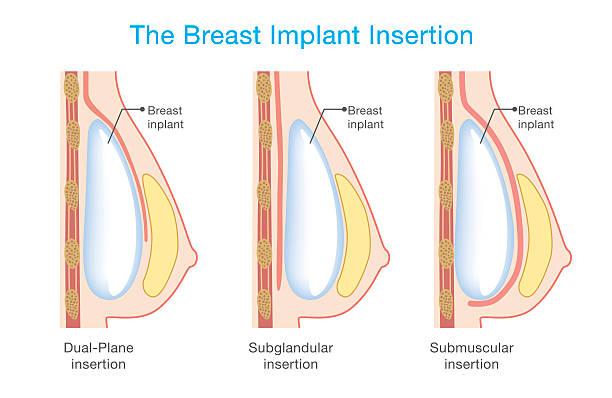
The procedure is performed under general anaesthesia and typically takes 60–90 minutes. Implants are placed either behind the breast tissue (subglandular) or behind the pectoral muscle (submuscular), through an incision made either in the inframammary fold beneath the breast, around the areola, or in the armpit. Each incision location and implant placement has specific indications, advantages, and trade-offs that your surgeon should discuss in the context of your anatomy and goals.
Recovery involves a surgical bra worn for several weeks, a return to light activity within 7–10 days, and a return to full physical activity at approximately six weeks. Final results are typically visible at three to six months, once swelling has fully resolved and the implants have settled into their final position.
The implant choices available today are meaningfully better than those available even a decade ago. Understanding the differences matters because the type of implant you choose has a significant bearing on how the result looks, feels, and ages.
Silicone gel implants.
The most widely used implant type globally. Modern cohesive gel implants — often called "gummy bear" implants — hold their shape and feel considerably more natural than older silicone formulations. They come in round and anatomical (teardrop) profiles and in a range of projection levels. The vast majority of the natural-looking augmentation results associated with contemporary Hollywood are achieved with cohesive silicone gel.
Saline implants.
Filled with sterile salt water, saline implants are firmer and less natural-feeling than silicone. They are still used — particularly in patients who prefer the option of detecting a rupture immediately, since a saline implant deflates visibly if the shell fails — but they have been largely displaced by silicone for aesthetic results in patients who are candidates for both.
Structured saline implants.
A newer category that uses an internal structure to give saline implants a more natural feel and improved shape retention. Less widely available than standard silicone or saline but increasingly used in patients who prefer saline for safety reasons but want a more natural result.
Fat transfer breast augmentation.
Liposuction is used to harvest fat from another area of the body — typically the abdomen, thighs, or flanks — which is then processed and injected into the breast tissue. Fat transfer produces a subtle, entirely natural increase in volume — typically one cup size or less — and is suitable for patients who want minimal enhancement with no implant. It is not a replacement for implants in patients seeking significant size change.
Size is the aspect of breast augmentation most influenced by celebrity culture — and the aspect where patient expectations most frequently diverge from clinical reality.
Implant volume is measured in cubic centimetres (cc), not cup sizes. Cup sizes vary by bra brand, back measurement, and individual body proportion — they are not a reliable specification for a surgical outcome. When a patient says she wants to go from a B cup to a D cup, a reputable surgeon will translate that into a cc range based on her chest width, skin laxity, and existing breast tissue, not simply select an implant size that sounds equivalent.
The most consistent finding in breast augmentation patient satisfaction research is that patients who choose implants proportionate to their frame report higher long-term satisfaction than those who choose the largest implant they can accommodate. This is partly aesthetic — overlarge implants in a small frame age poorly and often require revision — and partly physical: implants above a certain weight relative to the patient's frame contribute to back and shoulder discomfort over time.
The Hollywood shift toward proportionate, natural-looking augmentation is, in clinical terms, the correct direction. It reflects what surgeons have been advising for years: choose an implant that enhances your existing frame, not one that creates a new one.
A useful tool in the sizing conversation is implant sizers — physical implants of different volumes that you can try in a bra during your consultation to develop a realistic sense of what different sizes look and feel like on your specific body. Any reputable surgeon should offer this as part of the consultation process.
This is one of the most common questions in breast augmentation consultations and one where patient preferences often differ from what the Hollywood aesthetic suggests.
Round implants are symmetrical spheres that provide volume evenly across the upper and lower pole of the breast. When placed correctly, they move naturally with the body and provide the fuller upper pole that is associated with the augmented look. If a round implant rotates — which implants occasionally do — there is no visible change in shape, because it is symmetrical.
Anatomical implants — also called teardrop or shaped implants — have more volume in the lower pole and taper toward the upper pole, mimicking the natural breast silhouette more closely. They produce a result that tends to look less augmented and more natural, particularly in patients with minimal existing breast tissue. The trade-off is that rotation of an anatomical implant produces a visible shape distortion and may require corrective surgery.
The choice between round and anatomical is highly individual and depends on your existing breast tissue, chest wall anatomy, and the aesthetic outcome you are targeting. It is not a decision that should be made based on celebrity examples or online before-and-after photographs alone — it requires a consultation with a surgeon who can assess your anatomy directly.
Implant placement — whether the implant sits behind the breast tissue (subglandular) or behind the pectoral muscle (submuscular, also called dual plane) — has a significant effect on both the aesthetic result and the patient experience.
Submuscular / dual plane placement is the more widely recommended option for most patients. The additional layer of muscle coverage produces a more natural upper pole slope, reduces the risk of visible rippling, and is associated with lower rates of capsular contracture — the hardening of the scar tissue around the implant that is one of the most common long-term complications of breast augmentation. The trade-off is a longer, more uncomfortable initial recovery as the pectoral muscle adjusts.
Subglandular placement puts the implant directly behind the breast tissue, above the muscle. It is appropriate for patients with sufficient existing breast tissue to provide coverage and is associated with a shorter initial recovery. It tends to produce a rounder, fuller upper pole immediately — which is part of the reason it was favoured in the era of more overtly augmented celebrity results — but carries a higher risk of visible rippling and, over time, may produce a less natural appearance as the breast tissue ages and thins.
For most patients seeking the natural, proportionate result that represents the current standard of care, submuscular or dual plane placement is the appropriate choice. Your surgeon should explain the reasoning for the recommended placement in the context of your specific anatomy.
The following questions should be raised at your consultation before any decision is made.
What implant type, size, profile, and placement do you recommend for my anatomy, and why? The answer should be specific to your chest width, tissue thickness, skin laxity, and goals — not a generic recommendation.
Can I see before-and-after photographs of patients with a similar starting point to mine — similar body frame, similar existing breast tissue, similar goals? General augmentation portfolios are less useful than cases that closely match your anatomy.
What incision location do you recommend, and what does the scar look like at twelve months? Ask to see scar photographs at twelve months post-operatively, not just at six weeks.
What is your capsular contracture rate, and how do you manage it if it occurs? This is the most significant long-term complication risk in breast augmentation. A surgeon who cannot give you a figure warrants scrutiny.
What happens if I am unhappy with the size or result? Understand the revision process, the timeline for considering revision, and any associated costs before you commit.
What is your approach to implant revision and replacement over time? Implants are not lifetime devices. Most manufacturers recommend assessment at ten years and replacement if necessary. Understanding this before the initial procedure is part of informed consent.
Turkey has become one of the most visited destinations for breast augmentation, and for reasons that go beyond cost. Istanbul's private hospitals treat a very high volume of international breast surgery patients, which has produced a depth of clinical experience — with diverse body types, implant types, and aesthetic goals — that is difficult to match in lower-volume Western markets.
The cost of breast augmentation in Turkey is typically 60–70% lower than in the UK or Germany. A comprehensive all-inclusive package — covering surgery, implants, anaesthesia, hospital stay, transfers, and follow-up — typically ranges from £2,500 to £4,500. The equivalent procedure in the UK costs £5,000–£8,000.
That cost difference is meaningful, but it is not the primary consideration for a well-informed patient. The primary consideration is the surgical outcome. At a JCI-accredited hospital with a board-certified surgeon, the clinical standard is equivalent to Western Europe. Turkey has more than 50 JCI-accredited hospitals. The savings reflect lower operating costs, not a reduction in the standard of care.
See our full guide to breast augmentation in Turkey — costs, clinics and results for the complete evaluation framework, including how to assess clinic credentials, what an all-inclusive package should cover, and what questions to ask before booking. For package options specifically, see breast augmentation Turkey all-inclusive packages.
How To Evaluate A Breast Augmentation Clinic In Turkey
Not all clinics offering breast augmentation in Turkey operate to the same standard. The following criteria form the baseline for any serious evaluation.
JCI accreditation for the hospital — not just the surgeon's practice — is the non-negotiable starting point. This confirms that the facility meets international standards for patient safety, anaesthesia protocols, infection control, and post-operative care.
Board certification for the surgeon should include membership of the Turkish Society of Plastic, Reconstructive and Aesthetic Surgeons (TPRECD) and, ideally, ISAPS (International Society of Aesthetic Plastic Surgery). Verify this independently rather than relying on the clinic's own marketing.
Verified patient reviews — specifically for breast augmentation, from patients whose starting point and goals are comparable to yours — are the most useful indicator of the quality of results. Generic five-star ratings are not sufficient. Look for detailed reviews that describe the consultation process, the result at different stages of recovery, and the aftercare experience.
A dedicated patient coordinator who handles your pre-operative communication, logistics, and post-operative follow-up is standard practice at reputable clinics. If a clinic cannot assign you a named contact, that is a signal to look elsewhere.
A defined aftercare protocol for international patients — including how remote follow-up consultations are handled and what the escalation process is for any complication after you return home — is essential. This is one of the most important questions to ask, and one that separates well-organised clinics from those that treat aftercare as an afterthought.
See our guide to best breast augmentation surgeons in Turkey for a curated shortlist of clinics that meet all of these criteria.
Days 1–3: You will wake from surgery wearing a surgical bra that you will continue to wear for several weeks. Discomfort, tightness across the chest, and fatigue are normal in the first 72 hours. Most patients are mobile and comfortable at rest by day two or three.
Days 4–7: Discomfort reduces significantly. Most patients can manage light daily activities — walking, self-care, desk-based work — by the end of the first week. The surgical bra remains on at all times, including at night.
Weeks 2–4: Swelling is still present but reducing. The implants sit high on the chest initially and begin to drop and settle into their final position over the following weeks. Avoid lifting, strenuous exercise, and anything that raises the heart rate significantly.
Weeks 4–6: Most patients return to full normal activity, including exercise, at six weeks. Your surgeon will confirm your specific return-to-activity date based on your recovery progress.
Months 3–6: Swelling has largely resolved and the implants have settled. The result at three to six months is close to the final outcome. Scars continue to fade for twelve to eighteen months.
Frequently Asked Questions
How long do breast implants last?
Breast implants are not lifetime devices. Modern implants are designed to last ten to twenty years in most cases, but they can fail earlier and should be assessed periodically. Most manufacturers and surgeons recommend an MRI scan at ten years to check implant integrity, and replacement if any rupture or significant change is detected. Planning for eventual replacement is part of the long-term commitment of breast augmentation.
What is capsular contracture and how common is it?
Capsular contracture is the hardening of the natural scar tissue — the capsule — that forms around every breast implant. In most patients the capsule remains soft and unnoticeable. In some patients it tightens and hardens, causing the breast to feel firm, look distorted, and sometimes become painful. The incidence varies by implant type, placement, and surgical technique. Submuscular placement and textured implants (in appropriate cases) are associated with lower rates. Ask your surgeon for their specific capsular contracture rate before booking.
What is the difference between breast augmentation and a breast lift?
Breast augmentation adds volume. A breast lift — mastopexy — repositions and reshapes the breast tissue to address sagging, without necessarily adding volume. Many patients who believe they need augmentation actually need a lift, or a combination of both. A surgeon who examines you in consultation will advise which procedure addresses your specific concern. Adding an implant to a breast that needs lifting without performing the lift first typically produces a poor result.
Can I breastfeed after breast augmentation?
Most patients can breastfeed after breast augmentation, particularly when the incision is made in the inframammary fold rather than around the areola, and when the implant is placed submuscularly. The procedure does not affect mammary glands or milk ducts in most cases. Discuss your plans for future pregnancy and breastfeeding with your surgeon at consultation — it affects both the timing recommendation and the surgical approach.
What does an all-inclusive breast augmentation package in Turkey typically cover?
A reputable all-inclusive package should cover the surgical procedure, implants, general anaesthesia, one to two nights in hospital, airport transfers, hotel accommodation if required, post-operative garments, and follow-up appointments before you travel home. Confirm exactly what is and is not included before booking — specifically whether the implant brand is specified, whether hotel is included or optional, and what the aftercare protocol is once you return home.
The Hollywood shift toward natural, proportionate breast augmentation is not a fashion trend — it is a reflection of what good surgery has always looked like. Implants sized to the individual frame, placed correctly for that anatomy, and performed by a surgeon with the experience and transparency to guide that decision: this is the standard that produces the results celebrities and non-celebrities alike are now asking for.
For patients considering breast augmentation and researching their options in Turkey, Flymedi connects you with JCI-accredited clinics and board-certified surgeons, with a dedicated coordinator from first inquiry through to aftercare. View our verified clinics, read patient reviews, and request a free consultation at breast augmentation in Turkey — costs, clinics and results.
Take The First Step Get Started!
Our team will dedicate their effort and time to help you choose the clinic best for you. Our goal is not just to find ‘a doctor’ for you, but to find ‘the right doctor’.