Medical disclaimer: This article is for informational purposes only and does not constitute medical advice. Procedures, recovery timelines, and clinical outcomes vary by individual. Always consult a board-certified surgeon before making decisions about cosmetic surgery.
Cristiano Ronaldo is, by almost any measure, one of the most photographed people on earth. Across three decades of public life — from a skinny teenager at Sporting CP to a global icon at Al-Nassr — his face has been studied, scrutinised, and compared in extraordinary detail. It is no surprise that his appearance has become one of the most searched topics in cosmetic surgery, with "ronaldo plastic surgery" attracting consistent global search volume year after year.
Whether Ronaldo has had cosmetic procedures confirmed is a separate question from the more clinically useful one: why are elite athletes increasingly choosing cosmetic surgery, what procedures are most relevant to them, and what does someone considering similar work actually need to know?
No cosmetic procedure has been confirmed by Ronaldo or his representatives. That said, board-certified surgeons who have commented publicly on his photographs over the years have noted several changes consistent with possible cosmetic intervention.
His nose — particularly the bridge and tip — appears more refined in recent photographs than in his early career images, which is consistent with rhinoplasty. His hairline, which showed signs of recession in his mid-twenties, is notably fuller now, which is consistent with a hair transplant — a procedure Ronaldo has neither confirmed nor denied but which is widely attributed to him given how complete and natural his hair restoration appears. His skin, at 39, is visibly smoother than one might expect without professional skincare intervention, suggesting at minimum a consistent aesthetic medicine routine.
None of these observations constitute confirmation. They do, however, open a genuinely useful clinical conversation — because the procedures attributed to Ronaldo are among the most requested by male patients globally, and the context of athlete aesthetics is one worth understanding properly.
The image of the stoic athlete who accepts the physical cost of sport without complaint is giving way to something more honest: elite athletes take meticulous care of their bodies and their appearance, because both are part of their professional identity and commercial value.
This is not vanity in the pejorative sense. Athletes at Ronaldo's level earn a significant portion of their income through brand endorsements, social media, and public appearances — all of which are directly tied to how they look. The same discipline that drives a footballer to train twice daily, monitor his diet to a gram, and optimise his sleep also makes him a candidate for cosmetic procedures when the return on investment is clear.
There is also a psychological dimension. High-performance athletes tend to have a precise internal model of how their body should look and perform. When that model diverges from what they see — a receding hairline at 25, asymmetry from an old injury, skin damage from years of outdoor training — they are often more motivated than the general population to correct it. They are also, typically, better resourced to do so.
The result is a quiet but significant cultural shift: cosmetic surgery is becoming normalised within elite sport in a way it simply was not a generation ago. Ronaldo is the most prominent name in this conversation, but he is far from alone.
The Procedures Most Commonly Associated With Athletes
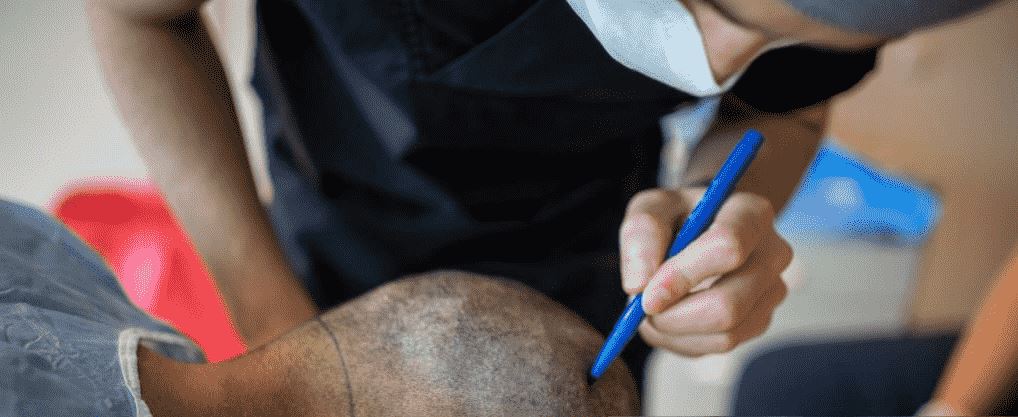
Hair loss is among the most common concerns for male athletes, particularly in contact and outdoor sports where hormonal profiles and sun exposure accelerate the process. A hair transplant — specifically FUE (follicular unit extraction), which leaves no linear scar — is well-suited to athletes because recovery is relatively swift and the result, when performed well, is completely undetectable.
Ronaldo's hair restoration is widely cited as one of the most successful examples in public life. The density, natural hairline design, and absence of any visible scarring are consistent with a high-quality FUE procedure. Turkey has become the global leader in hair transplant surgery — Istanbul alone performs more hair transplants annually than any other city in the world, and the cost for a comparable procedure is 60–70% lower than in the UK or Germany without any reduction in clinical standard at accredited facilities.
For patients considering a hair transplant, the critical variables are graft count, the naturalness of the hairline design, and the surgeon's experience with your specific hair type. See our full guide to hair transplant in Turkey — costs, clinics and results for the complete breakdown.
Athletes sustain nasal injuries at a higher rate than the general population — football, rugby, martial arts, and boxing all carry significant risk of nasal fractures and septal deviation. Many athletes who seek rhinoplasty are doing so for functional as well as aesthetic reasons: a deviated septum impairs breathing, which impairs performance, which is a serious professional concern for anyone who competes at the highest level.
Functional septorhinoplasty — which corrects the internal airway while refining the external appearance — is one of the most technically demanding procedures in facial surgery. The best outcomes combine genuine improvement in nasal airflow with a result that looks entirely natural. For athletes, who are often photographed from every angle, the latter is particularly important.
The changes visible in Ronaldo's nasal profile across his career are subtle — not the dramatic reduction associated with older rhinoplasty techniques, but the kind of careful refinement consistent with modern preservation rhinoplasty, which maintains the structural integrity and character of the nose while addressing specific concerns. This is the standard any patient should be seeking. See our guide to rhinoplasty in Turkey — what to expect for the procedure, recovery, and clinic selection framework.
Athletes spend more time outdoors than most people, and UV exposure over a long career produces visible consequences: sun damage, uneven skin tone, and accelerated ageing around the eyes and forehead. Professional aesthetic medicine — ranging from medical-grade skincare and chemical peels through to anti-wrinkle injections and skin-boosting treatments — is increasingly standard practice among elite athletes who want their skin to reflect the standard of care they apply to everything else.
These are not surgical procedures, and the threshold for considering them is lower. But they require a qualified aesthetic physician and a considered plan — not a walk-in clinic and a one-size product. Any aesthetic medicine programme should begin with a consultation that assesses your skin type, concerns, and goals before any treatment is administered.
Liposuction and high-definition body contouring — procedures that remove or redistribute fat to enhance muscle definition — are increasingly popular among male patients who are already lean and fit but want more visible muscle definition in specific areas. For former athletes or those transitioning out of elite sport, these procedures can address the body composition changes that come with reduced training load without requiring a return to unsustainable training volumes.
Athletes present specific considerations that a cosmetic surgeon should account for.
Recovery and performance timelines matter.
An athlete cannot afford a six-week recovery that disrupts a training block or a playing season. Procedures must be timed around competitive schedules, and the surgeon should understand this context. For professional athletes, the timing of surgery is as clinically important as the procedure itself.
Physical fitness changes healing dynamics.
Higher cardiovascular fitness, better circulation, and lower body fat percentage can accelerate wound healing. Conversely, the higher baseline level of physical activity means the post-operative rest requirement needs to be clearly understood and enforced — athletes tend to push back into training earlier than they should.
Discretion is a genuine clinical requirement.
For high-profile athletes, the privacy implications of a cosmetic procedure are significant. JCI-accredited hospitals in Turkey operate under the same patient confidentiality standards as their Western European equivalents. The choice of Istanbul as a destination for cosmetic surgery among elite athletes — Ronaldo among them, according to widespread reporting — is not coincidental.
Results need to withstand intense photographic scrutiny.
A natural-looking result matters for anyone, but it matters particularly for people whose face is photographed thousands of times per year. This raises the technical bar for surgeon selection. See our guide to best plastic surgeons in Turkey for the evaluation framework.
The criteria for selecting a clinic are the same regardless of whether you are a professional athlete or not — but the weighting of certain factors shifts.
JCI accreditation.
The hospital, not just the surgeon, should meet Joint Commission International standards. This is the baseline for patient safety, anaesthetic protocols, and infection control. Over 50 hospitals in Turkey hold JCI accreditation.
Board-certified surgeon with specific procedure experience.
General plastic surgery volume is not sufficient. A surgeon performing hair transplants should have a demonstrable FUE case volume and portfolio. A surgeon performing rhinoplasty on athletes should have experience with post-traumatic cases as well as purely aesthetic ones.
Discretion and privacy protocols.
Confirm how patient information is handled, whether VIP or private admission is available, and how the clinic manages external communications about patients.
A dedicated patient coordinator.
You should have a named contact who manages pre-operative communication, logistics, and post-operative follow-up — not a general enquiries inbox.
Defined aftercare for international patients.
Confirm what happens after you return home. You need a clear protocol for follow-up consultations, remote check-ins, and the escalation path if a complication arises.
Flymedi works with a curated shortlist of JCI-accredited clinics that meet all five criteria, and every patient is assigned a coordinator from first inquiry through to final follow-up.
The general rhinoplasty and hair transplant recovery timelines apply to athletes as they do to any other patient — but the return-to-sport component needs specific planning.
For hair transplants, most patients can return to light activity within 7–10 days. Contact sport and activities that risk impact to the scalp should be avoided for four to six weeks to protect the grafts during the critical early integration period.
For rhinoplasty, return to non-contact training is typically possible at four weeks. Contact sport — anything that risks a blow to the nose — should be avoided for a minimum of six weeks and ideally twelve, to allow the nasal bones to fully consolidate. Athletes must confirm this timeline with their surgeon and their club medical team before scheduling.
For body contouring and liposuction, compression garments are worn for several weeks post-operatively. Return to full training is typically six to eight weeks.
In all cases, the scheduling conversation between the patient, surgeon, and — for professional athletes — the club or team medical staff is essential before any procedure is booked.
Did Cristiano Ronaldo have a hair transplant?
No hair transplant has been publicly confirmed by Ronaldo or his team. However, the visible change in his hairline density between his mid-twenties and his current appearance is widely attributed by hair restoration surgeons to a high-quality FUE procedure. The result — if it is a transplant — is consistently cited as an example of what an excellent outcome looks like: natural hairline design, full density, and no visible scarring.
What is FUE and why is it preferred for athletes?
FUE — follicular unit extraction — is a hair transplant technique in which individual follicles are extracted from a donor area (typically the back and sides of the scalp) and transplanted to the thinning area. Unlike the older FUT (strip) technique, FUE leaves no linear scar, which means patients can wear their hair short without any visible evidence of the procedure. For athletes who wear their hair closely cropped, this is a significant practical advantage.
Is it possible to have cosmetic surgery without it affecting performance?
Yes, when procedures are properly timed and recovery is managed appropriately. The key is planning surgery during a break in the competitive calendar and confirming the return-to-activity timeline with both the surgeon and, for professionals, the club medical team before booking. Attempting to compress recovery to fit a tighter schedule increases the risk of complications and suboptimal results.
Why do athletes choose Turkey for cosmetic surgery?
A combination of factors: the clinical volume and surgical expertise available in Istanbul is genuinely competitive with Western Europe for the specific procedures most sought by athletes — hair transplants and rhinoplasty in particular. The cost is 60–70% lower than equivalent procedures in the UK or Germany. The privacy and discretion offered by JCI-accredited private hospitals in Turkey is comparable to the best private facilities in Europe. And the logistical infrastructure — transfers, hotel, coordinator — is well-developed for international patients.
What should I look for in a surgeon for athlete-specific cosmetic surgery?
Experience with your specific procedure, a portfolio of results from patients with comparable anatomy, and an understanding of the performance and timing constraints that apply to your situation. Board certification, JCI hospital accreditation, and a defined aftercare protocol for international patients are non-negotiable baseline requirements.
Cristiano Ronaldo's appearance has become a reference point in the athlete aesthetics conversation not because of any confirmed procedure, but because his discipline extends visibly to every aspect of how he presents himself — and because the results, whatever their origin, are consistently cited as examples of what meticulous care looks like.
The broader shift he represents is real: elite athletes are increasingly treating cosmetic surgery as part of the same professional body management framework as nutrition, physiotherapy, and training optimisation. The stigma that once attached to the subject is largely gone, replaced by a more practical question: what procedure, which surgeon, and when?
If you are considering cosmetic surgery and want to understand your options in Turkey, view our verified clinics or speak to a Flymedi coordinator who can match you with a surgeon experienced in the procedure relevant to your goals.
Take The First Step Get Started!
Our team will dedicate their effort and time to help you choose the clinic best for you. Our goal is not just to find ‘a doctor’ for you, but to find ‘the right doctor’.