
Bangkok International Dental Center ✔ Verified
Bangkok, Thailand · 15 clinic reviews
9.4FlymediScore
Lead: Assoc. Prof. Dr. Chatchai Kunavisarut, Dentistry

Speaks EN · TH
All-on-4 in Thailand is a full arch of fixed teeth on four implants, placed in Bangkok, Phuket or Chiang Mai over two trips: one for the implants and a temporary bridge, one for the final bridge a few months later. This page explains how Thai clinics quote the treatment, what the treatment-only prices in the listing below include and leave out, how the two trips fit around a long flight, and what your dentist at home will need from the clinic afterwards. The general All-on-4 guide covers the technique itself in more depth.
Figures are ranges, not promises. Suitability needs an individual assessment by a doctor.
Each clinic sets its own price, so check what the price includes before comparing two of them.


Bangkok, Thailand · 15 clinic reviews
Speaks EN · TH


Phuket, Thailand · 14 clinic reviews
Speaks EN · TH
Send your details and a coordinator will tell you which clinics are appropriate for your case, and which are not.


Chiang Mai, Thailand · 10 clinic reviews
Speaks EN · TH


Bangkok, Thailand · 15 clinic reviews
Speaks EN · TH


Bangkok, Thailand · 10 clinic reviews
Speaks EN · TH



Bangkok, Thailand · 10 clinic reviews
Speaks EN · TH
Clinics are scored and ordered by Flymedi. How ranking works.
Patients treated through Flymedi, in their own words. Nothing loads or plays until you press play.
Laura
Dental implants
Spoken in EnglishSource: YouTube
Helen Totsis
Dental implants
Spoken in EnglishSource: YouTube
Popi
Dental implants
Spoken in EnglishSource: YouTube
Gene Phillips
Dental implants
Spoken in EnglishSource: YouTube
Otilia Stefanciova
Dental implants
Spoken in EnglishSource: YouTube
Stephani Lvatts
Hollywood smile
Spoken in EnglishSource: YouTube
Duncan Allan
Dental implants
Spoken in EnglishSource: YouTube
Vasilicia Bocanet
Hollywood smile
Spoken in EnglishSource: YouTube
Mihai Madalin
Crowns
Spoken in EnglishSource: YouTube
Iain
Zirconium crowns
Spoken in EnglishSource: YouTube
Clinics are scored from patient reviews and ordered by Flymedi. The facts behind each position are listed below. How ranking works.
| Rank | Clinic | FlymediScore | Lead doctor | Experience | From | Why it is ranked here |
|---|---|---|---|---|---|---|
| 1 | Bangkok International Dental Center | 9.4 | Chatchai Kunavisarut | 31 years | Price on request | 15 clinic reviews. |
| 2 | Sea Smile Dental Clinic | 9.5 | Paruhat Prommontri | 20 years | €7,500Treatment only | 14 clinic reviews. |
| 3 | Dental World | 9.4 | Surasak Yowcharoensuk | 20 years | Price on request | 10 clinic reviews. |
| 4 | Bangkok Smile Dental Clinic | 9.4 | Not listed | Not listed | €7,500Treatment only | 15 clinic reviews. |
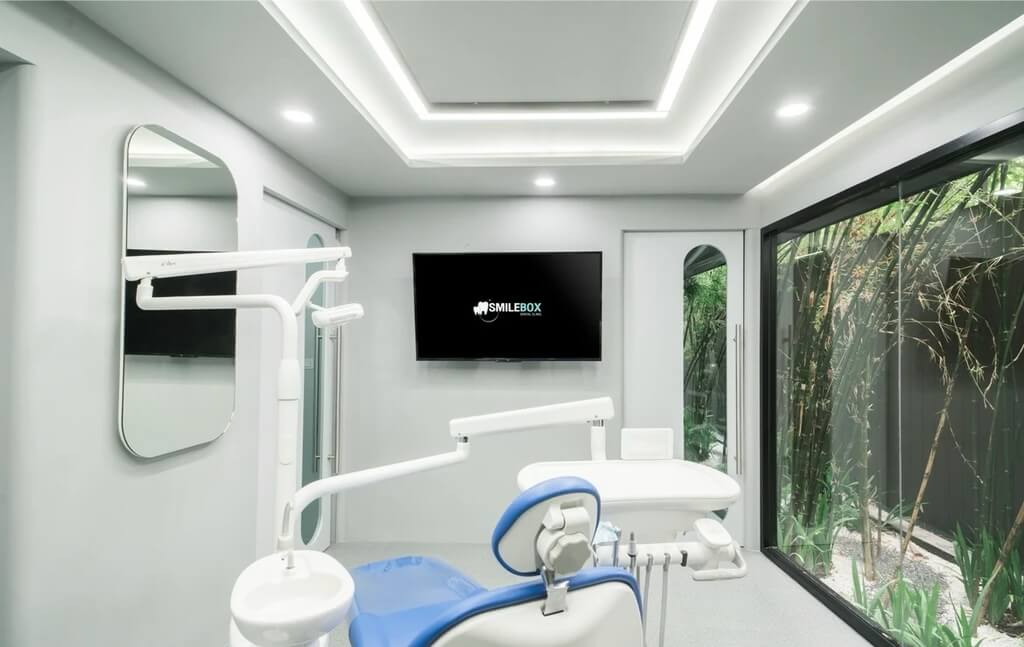
| 5 | SmileBox Dental Clinic | 9.5 | Vikram Bhatia | 15 years | €9,000Treatment only | 10 clinic reviews. |
| 6 | Intrarat Hospital | 9.5 | 1 doctor | Not listed | Price on request | 10 clinic reviews. |
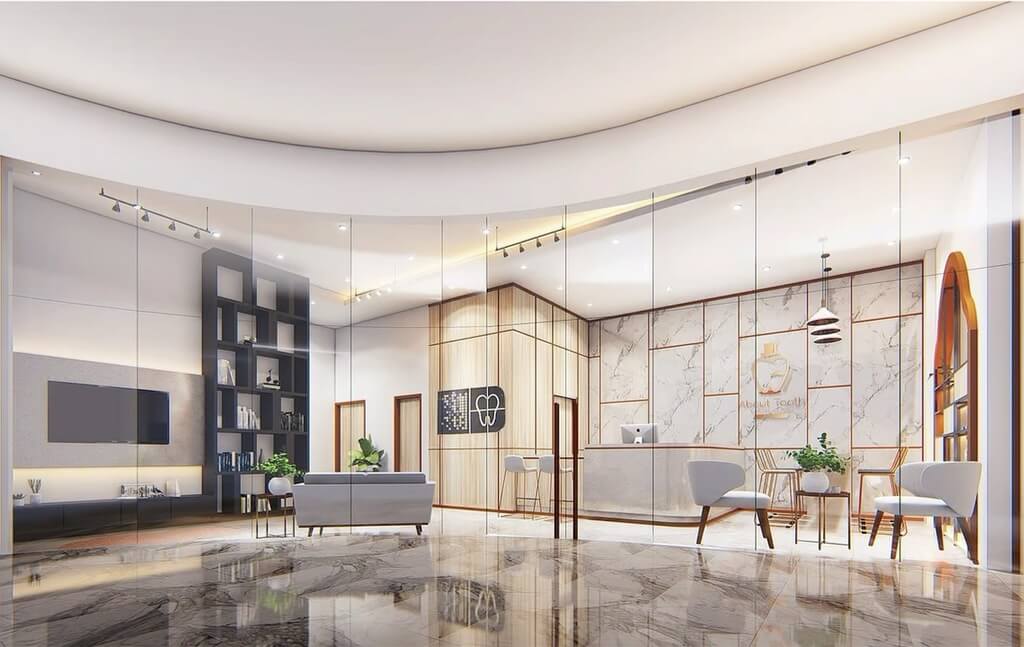
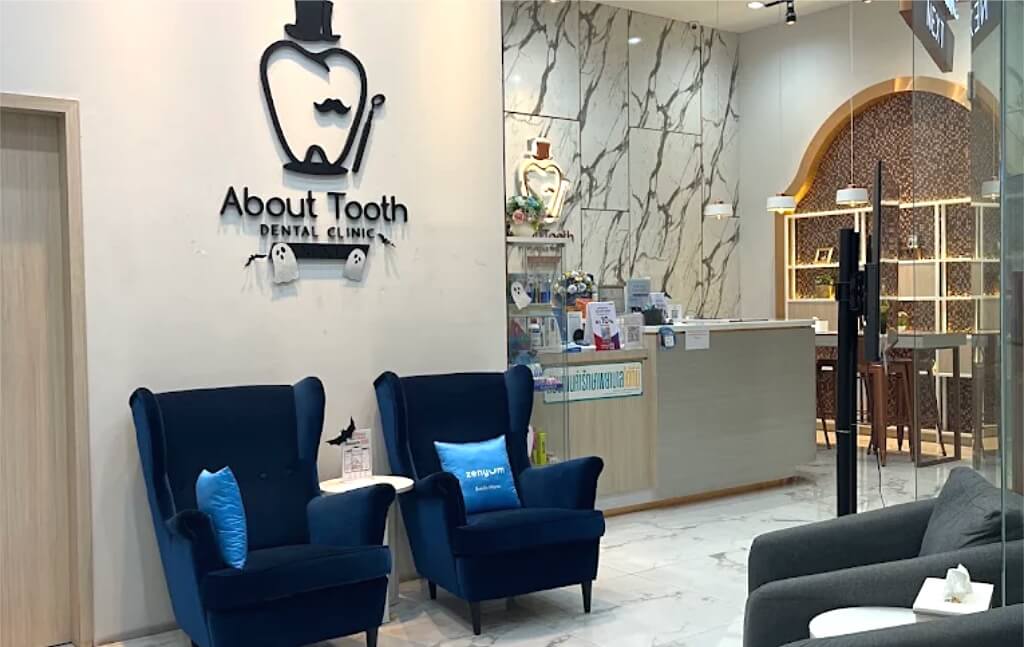
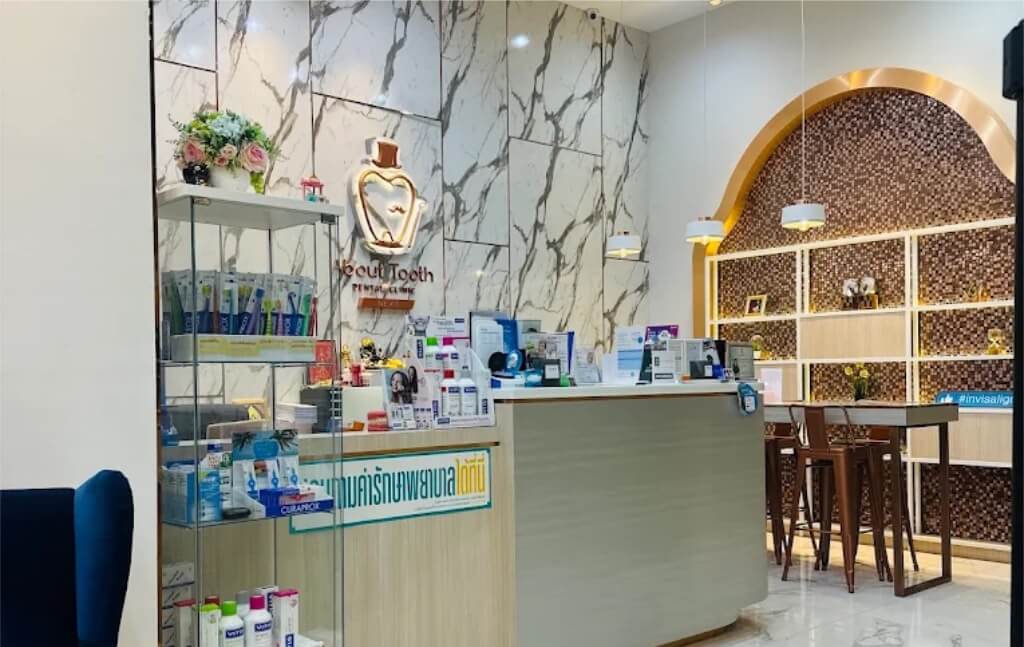
| 7 | About Tooth Dental Clinic | 9.5 | Nisara Tanarerkchai | 11 years | €9,500Treatment only | 10 clinic reviews. |
"Full mouth implants in Thailand" covers several different treatments, and the quotes you collect will only compare if they are for the same one. All-on-4 is a fixed bridge of a full arch of teeth screwed onto four implants; the two front implants stand upright and the two back implants are tilted so that they anchor in the denser bone at the front of the jaw and avoid the sinus above or the nerve below. Because the bridge is screwed on, you cannot take it out; only the dentist can.
| What the clinic calls it | What it is | Who it suits |
|---|---|---|
| All-on-4 | Four implants and a fixed, screw-retained bridge for one arch; a temporary bridge is usually fitted within days | Most people who have lost, or are about to lose, all the teeth in an arch and have enough bone at the front of the jaw |
| All-on-6 | The same idea on six implants, which spreads the load and gives a fallback if one implant fails | Larger jaws, a strong bite, or when the dentist wants a spare implant in reserve |
| All-on-X or Pro Arch | The brand-neutral names for the same family; the number of implants is decided from the scan | Anyone; ask what "X" means in your quote |
| Implant overdenture | A removable denture that clips onto two or four implants; you take it out to clean it | People who want stability at a lower price and do not mind a removable plate |
| Zygomatic All-on-4 | Long implants anchored in the cheekbone for an upper jaw with too little bone for standard implants | Long-standing upper dentures with severe bone loss; only a few Thai surgeons offer it |
Scroll sideways for the full table
"Permanent dentures in Thailand", which many readers search for, usually means All-on-4: a bridge that stays in your mouth and behaves like teeth, not a denture at all. If a clinic answers that search with a clip-on overdenture, you are being quoted a different, cheaper treatment. The Thailand All-on-6 and general dental implants pages cover the neighbouring options.
The people reading this page are mostly Australian, with a smaller group from the United Kingdom, the United States and New Zealand, and a noticeable share already living in Thailand. The reasons are practical. Bangkok and Phuket clinics have treated overseas full-arch cases for years and quote a fixed price per arch before you fly, the flight from Australia is short enough to make two trips realistic, and a week of soft food and rest is easier to bear somewhere warm than in a Melbourne winter.
Four things are worth checking before any of that matters:
All-on-4 suits people whose teeth in an arch are gone or beyond saving: long-term denture wearers, people with advanced gum disease, and people with a mouthful of failing crowns and root canals. The tilted back implants are the reason the technique needs less bone than placing an implant for every tooth, so many patients who were told they needed a sinus lift or bone graft first do not need one for All-on-4.
Thai surgeons will usually accept you if:
A heavy grinder can still have All-on-4, but the dentist will want you in a night guard afterwards, and may steer you to six implants or a stronger bridge material. Severe bone loss in the upper jaw is the one situation where standard All-on-4 may not be possible; the options are then a graft with a longer timeline or zygomatic implants.
Nearly every Thai clinic follows the same sequence, and understanding it helps you read a quote.
If the implants do not grip firmly enough, the surgeon will not fit a fixed bridge immediately. You would go home in a modified denture instead and have the bridge fitted once the implants have healed. It is not a failure, but it changes the plan, and a good clinic will tell you it is possible before you fly.
The final bridge is what you chew with for years, and the material is usually the biggest single line in a Thai quote after the implants themselves.
Ask which material the quote assumes, whether the temporary bridge is included, and what the clinic charges to remake a bridge if it fractures in the first years. That last answer tells you how confident they are in their laboratory.
Thai clinics quote per arch, and most of the clinics in the listing below publish a treatment-only price; the listing flags the lowest. Treatment only means the implants, the surgery and the bridge work, and not your flights, hotel or the second trip's travel. Before you compare two figures, make sure both cover the same things:
| Drives the price up | Drives it down |
|---|---|
| Both arches rather than one | One arch, usually the upper |
| Nobel Biocare or Straumann implants | Korean or Thai-distributed systems |
| Zirconia final bridge | Acrylic on titanium |
| General anaesthesia in a hospital | Local anaesthetic with sedation in a clinic |
| Extractions of many teeth, bone shaping, a sinus lift | Teeth already gone, no grafting |
| Six implants or zygomatic implants | Four standard implants |
| The final bridge included | The final bridge quoted separately, or later |
Scroll sideways for the full table
Two more things are specific to Thailand. Quotes are often given in Thai baht and converted for you; the baht moves against the Australian dollar and the pound, so fix the currency in writing. And Thai clinics rarely offer finance to foreigners, so the payment plans you see advertised are usually from a lender at home, not the clinic.
"All-inclusive dental holidays in Thailand" are sold by agencies and by a few clinics. A package normally bundles the treatment with airport pickup, a hotel near the clinic and a coordinator; it does not normally include flights, and it rarely includes the second trip. The questions to ask are the same as for any package: what is the clinical price on its own, what is the hotel worth, and what happens to the package price if the plan changes on the first morning because the scan shows something the emailed X-rays did not.
Insurance is worth a paragraph of its own. Australian private health extras almost never pay for treatment overseas, and Medicare does not; some Australians look at early release of superannuation on compassionate grounds for dental treatment, which is a matter between you and the tax office, not the clinic. British and Irish readers are in the same position as with any dental treatment abroad: budget as if nothing will be reimbursed, then be pleased if something is.
Most of the clinics in the listing are in Bangkok, with one in Phuket and one in Chiang Mai. Bangkok has the largest dental hospitals, in-house laboratories and the most surgeons doing full-arch work every week; it is the sensible default for two arches, zygomatic cases or anyone with a medical history. Phuket suits people who want to recover by the sea and fly in from Australia on a direct flight; ask where the bridge is made, because a clinic without a laboratory may courier work to Bangkok and add a day or two.
Chiang Mai has a loyal following among expats and retirees in the north, and a noticeable number of searches for All-on-4 prices there come from people already in the city. Prices are often a little lower than in Bangkok; the trade-off is a smaller pool of surgeons, so ask how many arches your surgeon has completed. Pattaya has clinics that market All-on-4 to visitors, but none is in the Flymedi listing at the moment; if you go there, apply the same checks.
Send a recent panoramic X-ray or, better, a CBCT scan, photographs and a list of medicines. The clinic replies with a plan and a quote per arch. Ask for the implant system, the bridge material and the second-trip price in the same email.
Plan on staying about a week to ten days. The first days are the scan, extractions and implants; the temporary bridge follows once the laboratory has made it; the last days are for bite adjustments and a check that everything is healing. Do not book the flight home for the day after surgery.
The implants fuse with the bone over the following months. You eat soft food, clean carefully under the bridge and keep an eye on the temporary teeth, which can chip. A dentist at home can check the bridge if something worries you, but most clinics ask you to send photographs and to contact them first.
Usually a week. The temporary bridge comes off, new impressions or a scan are taken, the final bridge is tried in and adjusted, and it is screwed on with new screws. Some clinics need slightly longer if the bridge is made in-house and adjusted more than once.
Annual check-ups, professional cleaning under the bridge and, every so often, the bridge removed, cleaned and refitted. This is the part that has to happen at home, which is why the records matter.
| Stage | Where | What to expect |
|---|---|---|
| Planning | Home | Scan, photographs, medical history, quote per arch |
| First trip | Thailand | Extractions, implants, temporary bridge, bite adjustment |
| Healing | Home | Soft food, careful cleaning, photographs to the clinic |
| Second trip | Thailand | Final bridge made, fitted and adjusted |
| Maintenance | Home | Cleaning and screw checks with a local dentist |
Scroll sideways for the full table
The first days bring swelling, bruising and some bleeding, especially if many teeth came out at once. Pain is usually managed with the tablets the clinic gives you. Most people are up and about within a couple of days and could do desk work, but a soft diet lasts far longer: for the whole healing period the temporary bridge should not be used to bite into anything hard. Speech takes a little practice with any new bridge, and the bulk of pink acrylic under the lip feels strange at first.
Flying home is fine once the surgeon is happy with the healing, which is why the stay is longer than the surgery itself. On the flight, keep your head up, drink water, and avoid anything that needs chewing.
Australian and British dentists sometimes write pages arguing that Thai savings are not worth it. Their real objection is not the surgery; it is what happens afterwards. A bridge on implants needs a dentist for life, and a dentist who did not place the implants may be reluctant to take on the work, or unable to without the right parts. You can remove most of that problem before you fly:
None of this makes Thailand the wrong choice. It makes the price comparison honest: the treatment costs what the listing shows, plus two trips, plus a maintenance relationship at home that you have to build yourself.
All-on-4 is major dental surgery and the risks are the risks of implants, multiplied by four or eight. The ones to discuss with the surgeon:
Ask what the clinic does when something goes wrong after you have flown home: whether they will consult by video, whether they will pay a local dentist for emergency work, and whether a failed implant is replaced free and on what conditions.
A well-made All-on-4 bridge lets you chew, speak and smile without a plate in your mouth, and most patients say the difference from a denture is immediate. How long it lasts depends on the bridge material, on grinding, on cleaning and on regular servicing more than on which country placed the implants. Acrylic teeth wear and are usually replaced or refurbished after some years; zirconia lasts longer but is less forgiving. The implants themselves, if they fuse and are kept clean, are meant to be for life.
Ask to see a clinic's healed cases, with the final bridge in place, rather than photographs taken on the day of surgery, and ask what it charges to remake or refurbish a bridge years later. Clinics that expect you back for maintenance will have an answer.
A large share of the people searching for All-on-4 prices in Thailand are already here: expats, retirees on the long-stay visas, and Thai patients searching in English. If that is you, the two-trip problem disappears and the picture changes. You can have the healing check-ups at the clinic that did the surgery, keep the warranty active without flying, and spread the treatment over more visits. Thai social security and most local health plans do not cover implants, so you will be paying as a private patient like everyone else; some international insurance plans do cover part of it, so ask before you assume. Thai patients searching for รากฟันเทียม all on 4 ราคา will find that the clinics in the listing quote the same per-arch prices in English and Thai.
Thailand is one of three places most English-speaking readers compare, and which one makes sense depends mostly on where you fly from.
| Thailand | Turkey | Mexico | |
|---|---|---|---|
| Who it suits | Australians, New Zealanders, expats in Asia | Britons, Irish and other Europeans | Americans and Canadians |
| Flight | Long from Europe and North America; short from Australia | Short from the United Kingdom and Europe | A drive or a short flight from the southern United States |
| Trips needed | Two, months apart | Two, months apart; some clinics compress the second | Two, or several shorter visits from border towns |
| Where the price sits | Between Turkey and Australia; treatment-only prices published in the listing | Usually the lowest quotes in this group; heavy package marketing | Similar to Thailand; wide spread between border clinics and city hospitals |
| Recovery setting | Warm, quiet, easy | City clinics in Istanbul and Antalya | Border towns or Cancun |
Scroll sideways for the full table
The Flymedi pages for All-on-4 in Turkey and All-on-4 in Mexico cover those markets. If your question is which of the three costs least for All-on-4, the honest answer is that the differences between the three are smaller than the differences between clinics within each, and that the second trip and the maintenance at home cost the same wherever the implants went in.
Reviews left by patients treated through Flymedi for this treatment. Each one is written in the patient's own language.
H. from Germany· All-on-4✓ Verified
5.0 · 15 February 2026
I’m from Germany and had All-on-4 done recently. The professionalism of the surgeons gave me full confidence. The hospital was extremely clean and organized. The cost savings compared to Germany are significant, but the quality is just as high, if not better. I’m very grateful.
P.· All-on-4✓ Verified
5.0 · 10 February 2026
I am very happy with the result after visiting BIDC multiple times. Dr.Jirach was very professional, excellent English skills and would recommend this place to anyone! 5/5
R.· All-on-4✓ Verified
5.0 · 13 January 2026
Came from Dublin for All-on-4 dental implants and I’m genuinely impressed. The clinic was modern and extremely clean. Recovery took a few days but their aftercare team kept checking on me which I really appreciated. Eating feels comfortable again and the teeth look very natural. Worth the long flight
A.· All-on-4✓ Verified
5.0 · 11 January 2026
I traveled from Ireland for All-on-4 and couldn’t be happier. The doctors were extremely experienced and reassuring throughout the whole process. I appreciated how they checked on me daily after the procedure. Thailand really stands out as a medical tourism destination because of the service and affordability. Thank you Sea Smile!
4 reviews
Answers from the medical content team, reviewed by the medical reviewer named on this page.
Written by Asli Diken, Expert Medical Writer at Flymedi. Medically reviewed by Dt. Mine Helvacıoğlu. Content updated 7 September 2026. Next scheduled review 7 September 2027.
This page is general information, not personal medical advice. It does not diagnose you and it does not replace an individual assessment by a doctor who has examined you.
Found something wrong or out of date on this page? Tell us and we will check it. Editorial standards and reviewer list: authors and reviewers.
Tell us about your case and a coordinator matches you with clinics that fit it.


